
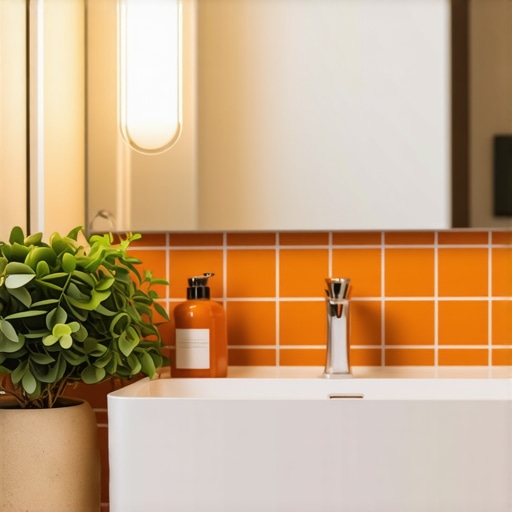
The hidden potential of 90s tile foundations
Most homeowners look at a 1994 bathroom and see a dated disaster that needs a sledgehammer. I look at it and see a subfloor that has already done its settling. If those tiles haven’t cracked in thirty years, the structural integrity of your substrate is likely superior to half the new builds I see today. I spent three days grinding concrete on a job last month just so the floor wouldn’t click like a castanet. Most guys skip the leveling compound and think the underlayment will hide the dip. It won’t. If your 90s tile is flat and bonded, you are sitting on a gold mine of stability. The goal is not to destroy the work of the past but to recalibrate the aesthetics through chemical restoration and architectural detailing. We are talking about the molecular reality of your surfaces. We are going to address the grout porosity, the baseboard transitions, and the physical weight of your shower enclosures without touching a single crowbar. This is about working with the physics of what is already there. You do not need a dumpster in your driveway to get a high-end finish. You need a moisture meter, a heavy duty cleaner, and a better understanding of how materials interact over time.
The chemistry of grout restoration and deep cleaning
Grout is a porous cementitious product that absorbs skin oils and mineral deposits over decades. Modernizing a bathroom starts with reversing the chemical staining within these microscopic pores. When you see dark lines in a 90s floor, you are looking at a failed seal that has allowed organic matter to penetrate the calcium carbonate structure of the grout. To fix this, you must use an alkaline cleaner to strip the old waxes and then an acidic treatment to open the pores for new pigment. If you want to know more about the technical side of this, look into grout restoration secrets for long lasting results. This isn’t just about scrubbing. It is about the pH balance of the surface. Once the grout is neutralized, you apply a high solids epoxy colorant. This creates a hydrophobic barrier that prevents future moisture ingress. It is a molecular shield. You can change a beige grout line to a crisp charcoal or a bright white, and suddenly the tile looks intentional rather than dated. For those who want a faster route, you can how to refresh grout without replacing it to get that immediate visual lift. This process is about saturation and bonding. It is much cheaper than a full rip out. Check the integrity of the bond before you start. If the grout is crumbling, it means the subfloor is deflecting. If it is just dirty, you have a solid foundation. [image_placeholder_1]
“A floor is only as good as the subfloor beneath it; deflection is the enemy of every joint.” – Master Flooring Axiom
The vertical transition of architectural baseboards
Upgrading your baseboards provides a visual anchor that distracts from the dated tile patterns of the previous century. Most 90s bathrooms used a tiny three inch baseboard that does nothing for the room. By installing a taller, more substantial profile, you change the proportions of the wall. This is a structural engineering trick. It creates a shadow line that makes the floor feel more grounded. You can find inspiration in baseboards makeover ideas to elevate your space. When I install these, I look for moisture resistant materials like PVC or primed finger jointed pine with a high quality enamel. You want to avoid MDF in a bathroom because the moisture vapor transmission rate will cause the edges to swell like a sponge. Think about the expansion gap at the bottom. A properly installed baseboard covers the perimeter gap required for the tile to expand and contract with the seasons. If you want a more modern aesthetic, look at chic baseboard designs that transform rooms in 2025. The physics of the room change when you increase the vertical height of your trim. It hides the messy tile cuts at the wall and gives the eye a new place to rest. Stop looking at the floor and start looking at where the floor meets the wall. That is where the modernization happens.
Comparing grout technologies for 90s tile updates
| Grout Type | Porosity Level | Moisture Resistance | Typical Use Case |
|---|---|---|---|
| Sanded Cement | High | Low | Wide joints in 90s floor tile |
| Unsanded Cement | High | Medium | Narrow wall tile joints |
| Epoxy Grout | Zero | High | High moisture shower areas |
| Urethane Grout | Low | Very High | Flexibility and stain resistance |
The physics of heavy glass shower enclosures
Removing a framed gold shower door and replacing it with frameless heavy glass is the single most effective way to modernize without demolition. Those old 90s showers were built like cages. The metal frames collect mineral scale and hold bacteria in the tracks. A frameless door uses 3/8 inch or 1/2 inch tempered glass that relies on heavy duty brass hinges anchored directly into the wall studs. This opens the sight lines and allows the 90s tile to become a background texture rather than a focal point of claustrophobia. You should explore showers with a style trendy ideas for small bathrooms to see how glass changes the perceived square footage. When you install these, you have to be careful about the curb. If the curb is not sloped toward the drain, the lack of a frame will allow water to migrate onto the bathroom floor. This is basic hydraulic pressure. You can also look at showers that wow modern designs for 2025 for ideas on hardware finishes. Avoid the cheap chrome and go for matte black or brushed nickel to kill that 90s vibe instantly. The weight of the glass alone makes the bathroom feel expensive. It is a structural upgrade that uses the existing tile footprint. Just make sure your hinges are hitting wood, not just drywall anchors. That glass is heavy and gravity never takes a day off.
Eco friendly surface treatments and cleaning protocols
Sustainable bathroom modernization focuses on extending the life of current materials rather than contributing to landfill waste. Every time someone guts a bathroom, tons of ceramic and mortar go into a hole in the ground. By using high performance sealants and steam cleaning, you are being a better steward of the environment. Check out eco friendly tile solutions for sustainable homes in 2025. I always tell clients that the greenest floor is the one that is already installed. Use a steam cleaner at 200 degrees Fahrenheit to blast the bacteria out of the tile texture. This is a physical cleaning method that avoids harsh chemicals. Then, use tile cleaning tips for a sparkling bathroom in 2025 to maintain that finish. When the tile is truly clean, it reflects light differently. The 90s haze is often just years of soap scum and floor wax. Once you strip that away, the original glaze of the porcelain can shine again. You are restoring the refractive index of the surface. It is a simple concept that most people ignore in favor of demolition. Modernize the lighting to a 3000K LED and those old tiles will look completely different under a balanced light spectrum. The yellowing effect of old incandescent bulbs is often what makes 90s tile look so bad. Change the light, change the room.
Modernization checklist for 90s bathrooms
- Test all tiles for hollow sounds with a mallet to ensure bond strength.
- Remove old silicone caulk and replace with 100 percent RTV silicone.
- Deep clean grout with an alkaline stripper to remove grease.
- Apply a penetrating sealer or epoxy grout colorant for stain resistance.
- Swap out plastic baseboards for 5.25 inch moisture resistant profiles.
- Install a frameless glass door to open the visual space.
- Replace 90s yellow lighting with 3000K neutral white LEDs.
“The National Wood Flooring Association and Tile Council of North America emphasize that moisture management is the primary factor in installation longevity.” – TCNA Technical Guide
The strategy of hardware and fixture recalibration
Swapping out 90s faucets and cabinet pulls for modern silhouettes creates a contrast that makes the old tile look like a deliberate design choice. It is about the juxtaposition of the old and the new. If you keep the 90s brass faucets, the 90s tile looks old. If you put a sleek, square matte black faucet on that same sink, the tile suddenly looks like a vintage textured element. This is a psychological trick used by designers. You are changing the context of the room. Focus on the mechanical quality of the fixtures. Look for ceramic disc valves that won’t leak. Pay attention to the PVD finishes that won’t peel. When you update the hardware, you are also updating the daily experience of using the room. It feels tighter, more precise. You don’t need to move the plumbing. You just need to change the interface. This approach respects the work of the original plumber while giving the homeowner a modern feel. It is a win for the budget and a win for the structural integrity of the home. Every time you open a wall, you risk finding a problem you didn’t want to solve. Keep the walls closed, keep the tile on the floor, and focus on the details that people actually touch. That is how you modernize without the headache of a full gut job. It is practical, it is fast, and it works every single time I do it. If you need more help, you can always contact us for advice on your specific project. Protect your investment by maintaining the substrate. That is the secret of the trade. Check our privacy policy for more information on how we handle your data.