
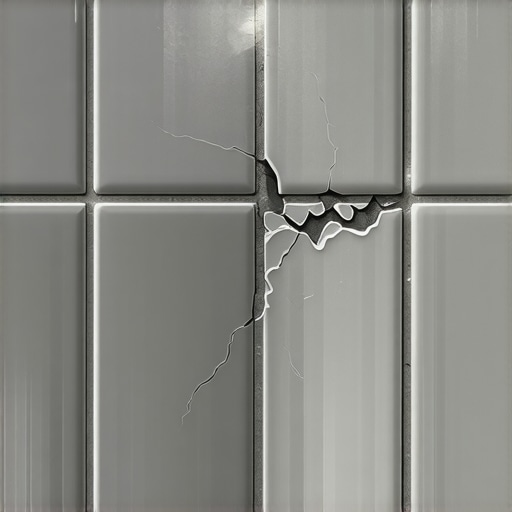
The subfloor secret that destroys tile
Most guys skip the leveling compound. They think the underlayment will hide the dip. It won’t. I spent three days grinding concrete on a job last month just so the floor wouldn’t click like a castanet. That grit under my nails and the smell of pulverized silicate reminded me that a shower is only as stable as the substrate. If you see a hairline fracture in your 2026 shower grout, do not blame the grout. Blame the deflection in the subfloor or the lack of structural reinforcement in the wall studs. Most homeowners assume tile is a rigid shield. In reality, tile is a brittle skin over a moving body. When that body flexes, the skin breaks. I have seen fifteen thousand dollar wide-plank walnut floors cup like potato chips because of moisture, and I have seen master-bath showers crumble because someone used the wrong thin-set over a vibrating floor joist.
The ghost in the expansion gap
Shower grout cracks in 2026 because of structural movement, moisture-driven expansion, and the failure of rigid cementitious materials to handle building settling. Modern fixes include high-performance epoxy resins, flexible silicone-caulk transitions, and uncoupling membranes that allow the tile assembly to move independently from the subfloor, preventing stress transfers that snap grout lines. If you ignore the perimeter expansion joint, the tile will eventually tent or the grout will turn to dust.
You have to understand the physics of a house. Every building breathes. Wood expands when the humidity hits sixty percent. Concrete shrinks as it cures over a fifty-year cycle. When you jam tile tight against a wall with no gap, you are creating a ticking time bomb. I always leave a quarter-inch gap at the perimeter. People ask me why the gap is there. I tell them it is the lungs of the room. Without it, the floor suffocates and cracks. This is especially true in showers that wow modern designs for 2025 where large format tiles are the standard. These massive slabs put immense pressure on the grout lines because there are fewer joints to distribute the movement. If one joint fails, the whole wall looks like a spiderweb.
“A floor is only as good as the subfloor beneath it; deflection is the enemy of every joint.” – Master Flooring Axiom
Why your subfloor is lying to you
Subfloor deflection is the hidden cause of grout failure where the vertical movement of the floor exceeds the tensile strength of the grout. To fix this, installers must calculate the L over 360 rating for ceramic or L over 720 for natural stone to ensure the joists can support the weight without bowing. If the floor bounces when you walk, the grout will fail within six months regardless of the product quality. You cannot hide a weak structure with a fancy finish.
I have walked onto too many jobs where the contractor used half-inch plywood and thought it was enough for a slate floor. It is not. You need a rock-solid foundation. When we talk about grout restoration secrets for long lasting results, the first secret is usually a bag of self-leveling underlayment and a bunch of screws. I want those joists tight. I want the subfloor glued and screwed. If I hear a single squeak, I am not laying a single tile. The chemistry of modern adhesives has improved, but they still cannot overcome the laws of gravity and leverage. A bouncing floor acts like a lever, prying the grout out of the joints every time you step into the shower.
The chemistry of 2026 polymers and epoxy resins
Modern grout fixes rely on epoxy chemistry which replaces water-based hydration with a chemical reaction between resin and hardener for zero porosity. Unlike traditional cement grout, epoxy does not require sealing and is resistant to the acids found in modern soaps and shampoos. It remains slightly more flexible than Portland cement, allowing it to withstand the thermal expansion of hot showers without fracturing. This is the gold standard for durability in high-moisture environments.
Traditional grout is basically just colored concrete. It is porous. It absorbs water. It grows mold. When that water freezes or dries out too fast, the grout loses its structural integrity. Epoxy is a different beast. It is a plastic-like bond that grips the edges of the tile with a molecular hold. It is harder to work with. It is sticky. It smells like a chemical lab. But once it sets, you could hit it with a sledgehammer and the tile would break before the grout does. For those looking at how to refresh grout without replacing it, sometimes a topical epoxy colorant is the only way to save a failing installation without a full tear-out.
| Grout Type | Flexibility Rating | Moisture Resistance | Best Use Case |
|---|---|---|---|
| Sanded Cement | Low | Low | Wide joints in dry areas |
| High-Performance Polymer | Medium | High | Residential showers |
| Epoxy Resin | High | Maximum | Steam showers and commercial kitchens |
The 1/8 inch that ruins everything
Precision spacing in tile installation is the difference between a lifetime floor and a structural failure. If the grout joint is too narrow, the grout cannot penetrate deep enough to create a mechanical bond. If it is too wide, the material lacks the internal strength to hold itself together. Most 2026 tile failures stem from installers trying to achieve a seamless look without respecting the manufacturer’s minimum joint width requirements.
I see it all the time with the eco friendly tile solutions for sustainable homes in 2025. People want those tight joints. They want it to look like a single sheet of stone. But if you do not give that grout at least an eighth of an inch, it has no body. It is just a thin smear on the surface. Within a year, it will flake out. You need depth. You need the grout to sit deep in the shoulder of the tile. This is why I use T-shaped spacers and I never eye-ball it. My eyes are good, but a laser and a plastic spacer are better. You also have to consider the chic baseboard designs that transform rooms in 2025 because the transition from the floor to the wall is where most movement occurs. If you do not handle that transition with a flexible sealant, your grout will crack right at the floor line.
Three modern fixes that actually last
The three most effective fixes for cracking grout are the use of 100 percent silicone in change-of-plane joints, the application of pre-mixed urethane grouts, and the installation of waterproof uncoupling membranes. These methods address the root causes of failure: movement and moisture. By allowing the tile to move independently and blocking water from reaching the subfloor, these technologies ensure the grout remains intact for decades.
- Use 100 percent silicone caulk in all corners and where the floor meets the wall.
- Switch to pre-mixed urethane grout for consistent color and built-in flexibility.
- Verify that the subfloor meets TCNA L/360 deflection standards before thin-set hits the floor.
- Ensure the tile is back-buttered to achieve 95 percent coverage in wet areas.
- Install a topical waterproofing membrane like Kerdi to keep the substrate dry.
If you are dealing with a small space, you should check out showers with a style trendy ideas for small bathrooms to see how these technical fixes fit into modern aesthetics. A small shower is actually harder to grout because the angles are tighter and the water concentration is higher. You need to be a surgeon with the float. One contrarian point to remember is that while most people want the thickest underlayment possible, too much cushion actually causes the locking mechanisms on LVP or the grout on tile to snap under pressure. You want density, not fluff. A floor should feel like stone, not a mattress.
“Cement-based grout is a sponge; epoxy is a shield.” – Tile Council of North America Handbook Insight
Baseboards and the silent moisture trap
Baseboards often hide the most significant grout failures by trapping moisture behind the wall-to-floor transition. If the grout at the base of the wall is cracked, water can wick up into the drywall or down into the sill plate. This leads to rot that you will not see until the baseboard literally falls off the wall. Using moisture-resistant materials for baseboards makeover ideas to elevate your space is a critical part of a complete shower system.
I always tell my clients to pull their baseboards if they suspect a leak. The back of that wood tells a story. If you see black staining, your grout failed a long time ago. We often focus on the center of the floor, but the edges are where the war is won or lost. I use a specific bead of silicone behind the baseboard to create a secondary dam. It is an extra step. It takes time. But it means I do not get a phone call in three years about a moldy smell in the master closet. You have to think like water. Water is lazy. It wants the path of least resistance. Your job is to make every path a dead end. Following tile cleaning tips for a sparkling bathroom in 2025 will help maintain the surface, but if the water is already behind the tile, no amount of scrubbing will save you.


![Shower Tile Rattling? 3 Grout Fixes That Actually Work [2026]](https://elegantfloorz.com/wp-content/uploads/2026/04/Shower-Tile-Rattling-3-Grout-Fixes-That-Actually-Work-2026-420x300.jpeg)