I spent three days grinding concrete on a job last month just so the floor wouldn’t click like a castanet. It was a high-end renovation where the owner wanted wide-plank engineered oak. But when we pried off the existing trim, the smell of wet earth and oxidized pine hit me like a sledgehammer. Most guys skip the leveling compound and they definitely skip checking what is happening behind the wood. They think the underlayment will hide the dip. It won’t. And it certainly won’t stop the black mold eating your studs from the bottom up. I have spent twenty-five years on my knees with a moisture meter and a level. I can tell you that a baseboard is not just a piece of jewelry for your room. It is a structural dam. If you do not build that dam correctly, the water wins. My hands smell like WD-40 and oak dust today because I just finished remediating a house where the baseboards were literally acting as a wick for a leaking shower pan. We are going to look at the physics of how this happens and how to fix it before your walls turn to mush.
The shadow behind the trim
Baseboards fail because installers treat them as aesthetic masks rather than ventilation regulators. When hydrostatic pressure pushes moisture through a porous concrete slab, the baseboard interface captures that humidity. This creates a micro-climate behind the drywall where fungal spores thrive in the dark. This is not just a cosmetic issue. It is a failure of the building envelope at its most vulnerable point. Most modern homes use Medium Density Fiberboard (MDF) for trim. MDF is essentially compressed sawdust and glue. It acts like a sponge. When it sits against a slab with a high moisture vapor emission rate, it sucks up water. That water then transfers to the paper backing of the drywall. You will not see it for years. By the time the paint bubbles, the wood behind it is already gone. You need to understand the capillary action involved here. Water molecules move through the microscopic pores of your concrete, seeking a lower concentration of moisture. That lower concentration is your climate-controlled living room. The baseboard is the first thing in its way.
“A floor is only as good as the subfloor beneath it, deflection is the enemy of every joint.” – Master Flooring Axiom
Why your subfloor is lying to you
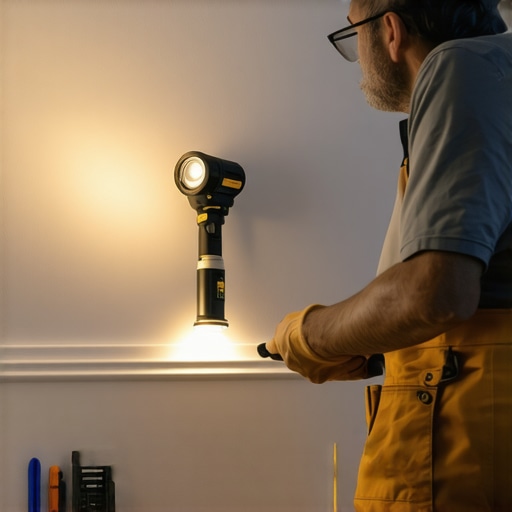
Subfloor moisture levels must be measured with calcium chloride tests or in-situ relative humidity probes to ensure they meet NWFA standards before any trim is installed. If your subfloor is reading above four percent on a concrete scale, you are asking for trouble. Many installers think that because the surface feels dry, the slab is cured. It is not. Concrete can take months to reach equilibrium. If you slap a non-breathable baseboard over a damp slab, you are trapping vapor. This is especially dangerous in areas with high humidity. In coastal regions, the salt-heavy air interacts with the lime in the concrete, creating a corrosive environment for any fasteners. I have seen stainless steel nails rusted through in less than five years because of this hidden moisture. You must create a break. This is why we use a backer rod or a specific bead of high-grade sealant. You can find more about high-performance designs at chic baseboard designs that transform rooms in 2025. We are looking for systems that allow the wall to breathe while keeping liquid water out. This is the difference between a floor that lasts a lifetime and one that rots in a decade.
The 1/8 inch that ruins everything
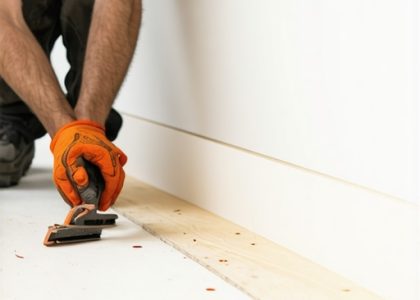
Expansion gaps at the perimeter of a floor are mandatory for structural integrity and ventilation, yet they are often filled with debris or compressed tight by baseboards. If you jam your baseboard down tight against the flooring, you are killing the floor’s ability to move. You are also creating a direct path for any spill to be sucked up into the wall. I always leave a minimum of an eighth of an inch between the bottom of the base and the top of the floor. In a bathroom, this gap is even more critical. You need to use a high-quality 100 percent silicone sealant here, but only if the floor is tile. If you are dealing with grout, you need to be even more careful. Grout is porous. It will move water horizontally through the room. If your grout lines run right into the baseboard, they are delivering moisture directly to your wood. This is why grout restoration secrets for long-lasting results often focus on the perimeter joints. We treat that joint as a movement joint, not a static one. We use color-matched caulk that can handle the expansion and contraction of the house without cracking. When that joint cracks, water from a mopping bucket or a splash from the shower enters the wall cavity. That is where the rot begins.
| Material Type | Moisture Resistance | Acclimation Time | Best Use Case |
|---|---|---|---|
| Solid Oak | Moderate | 7-14 Days | High-end dry environments |
| MDF Trim | Very Low | 48 Hours | Low-budget, dry bedrooms |
| PVC/Polymer | Total | None | Bathrooms and basements |
| Engineered Wood | High | 3-5 Days | Variable humidity zones |
The chemistry of a waterproof seal
Silane-modified polymers represent the cutting edge of adhesive technology for 2026, offering a hydrophobic barrier that prevents capillary rise in baseboard installations. We are moving away from simple acrylic caulks. They shrink too much. They pull away from the wall. When they pull away, they leave a microscopic gap. That gap is a highway for water vapor. I prefer a high-solids sealant that remains flexible. You have to understand the molecular bond. A good sealant bonds to the cellular structure of the wood and the crystalline structure of the tile or stone. If you are working in a wet area, such as around showers that wow modern designs for 2025, you cannot afford a cheap seal. I have seen entire subfloors rotted out because a shower curb leaked into the baseboard channel. The water traveled ten feet down the wall before it ever showed a spot on the carpet. That is the ghost in the expansion gap. It is a silent killer of equity. You have to be a stickler for the details. You have to check the pH of your concrete. If the pH is too high, it will break down the adhesive on your luxury vinyl plank or the glue in your engineered floor. This chemical breakdown releases moisture and gasses that get trapped behind the baseboard. It turns into a toxic soup that eats the bottom of your studs.
“Water is a patient predator; it will find the one microscopic hole in your defense and exploit it until the structure fails.” – TCNA Installation Manual
The checklist for 2026 durability
- Verify subfloor moisture with a pinless meter before delivery of materials.
- Acclimate all wood products in the room where they will be installed for at least five days.
- Install a moisture-resistant barrier that extends at least two inches up the wall behind the baseboard.
- Use PVC baseboards in any room with a floor drain or a high risk of splashing.
- Maintain a consistent eighth-inch gap between the floor and the trim.
- Apply a high-quality, mold-inhibitor sealant to the bottom edge of all wood baseboards before installation.
- Check the integrity of the vapor barrier in the crawlspace or basement.
Vapor barriers must be lapped and taped with seam tape to prevent evaporative cooling from drawing moisture into the wall plates. If your crawlspace is wet, your baseboards will rot. It does not matter how much you spend on the trim. The physics of the house will pull that damp air up through the floor joists and into the wall cavities. This is why I always tell homeowners that a new floor starts in the dirt. You have to seal the ground. Then you seal the slab. Then you seal the floor. Only then do you think about the baseboards. It is a system. If one part of the system fails, the whole thing is compromised. I see people spending twenty dollars a square foot on marble and then using five-cent MDF trim. It is madness. It is like putting a cardboard bumper on a Ferrari. You want something that can handle a mop. You want something that can handle a spill. And you want something that will not feed mold if the humidity hits sixty percent in the summer. That is the practical reality of floor architecture. It is about managing the invisible forces of water and pressure. If you do that, your work will last long after I am gone. If you do not, you will be calling me in three years to tear it all out. And trust me, I am expensive when I have to fix someone else’s mistake. Keep the dust out of your lungs and the water out of your walls.