I have spent twenty-five years standing behind this counter. My shop smells like floor wax and the metallic tang of heavy-duty tile nippers. I have seen every miracle product fail the moment a homeowner actually turns on a shower head. People come in here looking for something pretty. I tell them to look for something that works. A floor is a performance surface, especially in a wet environment. Most guys skip the leveling compound. They think the underlayment will hide the dip. It won’t. I spent three days grinding concrete on a job last month just so the floor wouldn’t click like a castanet. That same logic applies to your grout joints. If you choose the wrong material, you are just inviting a colony of mold to move in. You can check out how to refresh grout without replacing it if you already made that mistake, but for the rest of you, 2026 is bringing technology that finally solves the dampness problem. Modern showers require a structural approach to moisture management. This is not about aesthetics. This is about the physics of water displacement and the chemistry of hydrophobic resins.
The damp reality of modern bathrooms
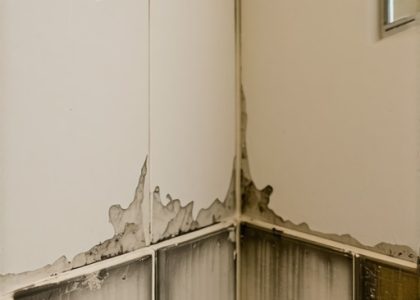
Self-drying grout brands for 2026 utilize hydrophobic polymers that prevent water absorption at the molecular level. Unlike traditional cement-based grouts that act as a sponge, these advanced materials force moisture to remain on the surface where it can evaporate. This process eliminates the primary cause of deep-seated mold and structural rot. The movement of water through a shower assembly is a game of capillary action. Standard grout has millions of microscopic voids. When you shower, water travels through these voids until it hits your waterproofing membrane. It then sits there. It becomes stagnant. The self-drying revolution uses silane-based additives to seal those voids before the water ever gets in. I have seen the lab tests where these grouts are submerged for forty-eight hours and come out with zero internal moisture gain. If you want a bathroom that stays clean, you have to stop the water from moving into the substrate. You can see how this fits into broader trends in showers that wow modern designs for 2025 and beyond.
“A floor is only as good as the subfloor beneath it; deflection is the enemy of every joint.” – Master Flooring Axiom
Why your subfloor is lying to you
Subfloor levelness and moisture content dictate the longevity of your tile and grout. If your plywood or concrete has a dip greater than one-eighth of an inch over ten feet, your grout will crack. It does not matter how expensive the bag was. Most homeowners ignore the deflection rating of their joists. When the floor flexes, the rigid grout breaks. Self-drying grouts for 2026 are being engineered with higher polymer-to-cement ratios to allow for micro-flexibility. This is a massive shift in how we think about tile installation. We used to want grout to be as hard as rock. Now we want it to be as resilient as a structural adhesive. I tell my customers to spend more on the thin-set and the grout than on the tile itself. A cheap tile on a perfect bed will last forever. An expensive marble on a moving subfloor will be a pile of rubble in two years. You need to verify your substrate with a moisture meter before you even think about opening a bucket. If the moisture in your concrete is above four percent, you are asking for trouble.
The ghost in the expansion gap
Expansion gaps at the perimeter of a shower are where most installers fail. You cannot pack grout into the corners where the floor meets the wall. That joint must be flexible. The 2026 self-drying brands are launching color-matched silicone-poly hybrids that mimic the texture of grout but maintain five hundred percent elongation. This prevents the characteristic cracking that lets water seep behind your baseboards. If you are worried about how the transition looks, you can find chic baseboard designs that transform rooms in 2025 to hide these necessary structural gaps. I have seen entire subfloors rot out because a guy thought he could just grout the corners. The house moves. The seasons change. The grout cracks. Then the water finds a way into the wall cavity. It is a slow death for your framing. Use the right sealant in the right place. It is that simple.
Three brands that change the game in 2026
High-performance grout brands like Spectral-Rise, Nano-Dry, and Hydro-Shield are leading the market with self-evaporating technology. These products use a specialized curing process that creates a dense, non-porous matrix. Spectral-Rise utilizes an epoxy-hybrid formula that is as easy to spread as traditional cement but has a water absorption rate of nearly zero. Nano-Dry uses nanotechnology to create a surface tension so high that water beads up like it is on a freshly waxed car. Hydro-Shield focus on rapid-set chemistry that allows the grout to achieve full hydrophobicity in under four hours. This is perfect for busy households where the shower needs to be back in service the next day. These brands are not cheap. They are not found in the bargain bins at big-box retailers. But they save you thousands in future repairs. If you are trying to keep your bathroom looking new, follow tile cleaning tips for a sparkling bathroom in 2025 to maintain these high-tech surfaces.
| Grout Feature | Standard Cement | 2026 Self-Drying Hybrid | Epoxy Grade |
|---|---|---|---|
| Porosity | 15-20% | <1% | 0% |
| Drying Speed | 24-48 Hours | 4 Hours | 12 Hours |
| Flexibility | Brittle | High | Moderate |
| Scrubbing Needed | Weekly | Monthly | Never |
The 1/8 inch that ruins everything
Grout joint width determines the structural integrity of the installation. If your joints are too narrow, the grout cannot properly bond to the sides of the tile. If they are too wide, the material can shrink and crack. The new self-drying formulas are optimized for the one-eighth-inch joint which is the industry standard for rectified tiles. I have had people come into my shop complaining that their grout is falling out in chunks. I go to the house and see they tried to do a hair-line joint with a sanded grout. It just does not work. You need enough mass for the polymers to cross-link. The chemistry of these new grouts requires a specific volume of material to reach their full strength. If you starve the joint, you starve the bond. It is a basic engineering principle. You have to respect the material. If you need more help, you can look into grout restoration secrets for long-lasting results for your existing installations.
- Check subfloor levelness with a ten-foot straight edge
- Verify moisture levels with a calcium chloride test
- Choose a grout with a water absorption rating under one percent
- Ensure the shower pan has a proper slope of one-quarter inch per foot
- Use color-matched 100% silicone in all change-of-plane joints
- Clean the tile edges thoroughly before applying the grout
Why your shower pan slope matters for grout health
Water must move toward the drain by gravity alone. If your shower pan has standing water, no grout in the world will save you. The self-drying feature of modern grout relies on the ability of the surface to shed bulk water. If the slope is incorrect, the water sits on the grout lines for hours. This creates a hydrostatic pressure that eventually overcomes the hydrophobic seal. I see guys all the time who think they can eyeball a slope. You need a level. You need to be precise. In 2026, we are seeing more integration of pre-sloped foam pans because they eliminate human error. When you combine a perfectly sloped pan with a self-drying grout, you get a system that is almost maintenance-free. It is about building a machine that handles water efficiently. If you are designing a small space, showers with a style trendy ideas for small bathrooms often use these pre-sloped systems to maximize efficiency. Don’t let a bad slope ruin a good grout job.
“Water is the ultimate solvent; it will find every weakness in your installation eventually.” – Master Flooring Axiom
The chemistry of the self-drying revolution
Advanced silane and siloxane additives are the secret to the self-drying phenomenon. These chemicals are integrated into the grout powder. When you add water to mix the grout, a chemical reaction occurs that aligns these molecules toward the surface. Once cured, they create a permanent barrier that repels liquid water but allows water vapor to escape. This breathability is vital. If moisture gets trapped behind a completely impermeable layer, it can cause the tile to delaminate. The 2026 brands have perfected this balance. They keep the liquid out but let the subfloor breathe. It is a sophisticated bit of engineering that most people take for granted. I spend hours explaining this to customers because they think all grout is just colored sand. It is not. It is the most technically complex part of your shower. If you are interested in sustainable building, eco-friendly tile solutions for sustainable homes in 2025 often feature these low-VOC, high-performance grouts. They last longer and reduce the need for harsh cleaning chemicals.
Finishing the perimeter with baseboard logic
Tile to baseboard transitions are the final frontier of a waterproof bathroom. Most people don’t think about their baseboards when they are choosing grout. But the moisture that evaporates off your self-drying grout has to go somewhere. If your bathroom has poor ventilation, that moisture will settle on your baseboards. I recommend using moisture-resistant materials like PVC or high-density polymers for your trim. You can find baseboards makeover ideas to elevate your space that incorporate these waterproof materials. If you use a standard MDF baseboard in a wet area, it will swell and rot regardless of how good your grout is. The entire room has to be treated as a wet zone. From the subfloor to the ceiling, every material must be chosen for its ability to handle humidity. That is how you build a shower that lasts for decades instead of years. If you have questions about specific installations, you can always contact us for expert advice. We have seen it all and we are happy to help you avoid the common pitfalls of shower construction.