
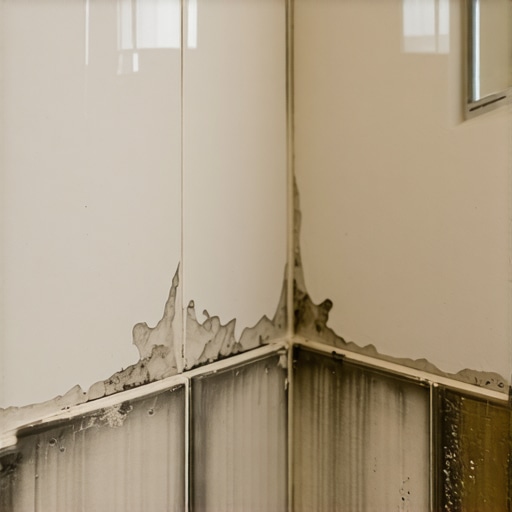
The microscopic anatomy of a grout failure
Shower grout pitting is a mechanical failure of the cementitious bond caused by improper water-to-powder ratios, acidic erosion, or early washing during installation. To stop pitting, you must utilize polymer-modified grouts, maintain a neutral pH environment, and ensure the structural subfloor meets L/360 deflection standards for ceramic tile.
I spent three days grinding concrete on a job last month just so the floor wouldn’t click like a castanet. Most guys skip the leveling compound. They think the underlayment will hide the dip. It won’t. This same lack of discipline is exactly why shower grout fails. I once walked into a luxury master bath where the grout looked like Swiss cheese. The homeowner was blaming the maid. I took one look at the grit under my fingernails and knew the truth. The installer had used too much water in the bucket to make it easier to spread. When that water evaporated, it left a honeycomb of air pockets. Every time that homeowner stepped on a tile, the air pockets collapsed. That is pitting. It is not a mystery. It is basic physics. If you want a floor that lasts until 2050, you have to stop treating grout like a cosmetic paste and start treating it like a structural adhesive. You need to understand the molecular reality of what is happening under your feet.
Why your cleaning routine is dissolving your floor
Grout pitting often stems from the use of aggressive acidic cleaners that dissolve the calcium carbonate binder within the grout matrix. Using pH-neutral cleaners and implementing a routine of deep sealing with nano-technology penetrants prevents the structural integrity of the joint from degrading over time.
Most people think a clean shower is a healthy shower. They reach for the strongest acid they can find to kill mold. This is a death sentence for cement-based grout. Grout is essentially a very fine concrete. It relies on a chemical bond formed during hydration. When you pour acid on it, you are literally eating the glue that holds the sand together. I have seen grout lines reduced to dust because someone used a vinegar solution every day for a year. You need to look at tile cleaning tips for a sparkling bathroom in 2025 to understand that modern chemistry has better answers. We are moving toward a world where we use enzymes and neutral cleaners. If you see white powder on your grout, that is efflorescence. It is a sign that water is moving through the slab and pulling minerals out. If you do not stop the water, the pitting will only get worse. You cannot just slap more grout on top. That is a band-aid on a broken leg. You have to address the porosity of the material. Modern showers require a different approach than the old mud-set beds of the 1970s. We have higher expectations now. We want showers that wow but we often forget the chemistry required to keep them that way.
“A floor is only as good as the subfloor beneath it; deflection is the enemy of every joint.” – Master Flooring Axiom
The structural deficit of a wet subfloor
Subfloor deflection and moisture vapor transmission rates are the primary hidden causes of grout pitting and cracking in modern showers. Ensuring the subfloor meets TCNA standards for stiffness prevents the micro-movements that snap the brittle bonds of the grout joint during daily use.
The subfloor is a liar. It looks flat, but under the weight of a person and a hundred gallons of water, it flexes. If that subfloor is plywood, it expands and contracts with the humidity of the room. If it is a concrete slab without a vapor barrier, it is constantly exhaling moisture. This moisture pushes against the bottom of your tile. It creates hydrostatic pressure. This pressure forces water into the microscopic pores of the grout from the bottom up. This is why you see pitting even in areas that do not get direct spray. The grout is being attacked from both sides. When you choose your materials, you should be looking at eco-friendly tile solutions for sustainable homes in 2025 because many of these new materials are engineered to handle these stresses better than traditional ceramics. You also need to think about how your grout interacts with your walls. If your baseboards are tight against the tile without an expansion gap, the whole floor becomes a single rigid sheet. When the house settles, something has to give. Usually, it is the grout. You can find better ways to handle these transitions by looking at chic baseboard designs that transform rooms in 2025. A proper expansion gap at the perimeter is not optional. It is a requirement for a floor that does not pit or crack.
| Grout Type | Porosity Level | Flexural Strength | Chemical Resistance |
|---|---|---|---|
| Standard Sanded | High | Low | Poor |
| Polymer Modified | Medium | High | Moderate |
| Epoxy Grout | Zero | Extreme | High |
| Pre-mixed Resin | Low | Medium | Moderate |
Three ways to save your grout in 2026
Tactics for 2026 focus on the integration of high-performance epoxy grouts, the application of hydrophobic nano-sealers, and the use of power-washing restoration techniques that do not compromise the cementitious matrix. These methods ensure a non-porous surface that resists the mechanical wear of daily showering.
First, stop using standard cement grout in wet areas. It is obsolete. I do not care what the guy at the big box store says. You want a high-performance, rapid-setting grout that is pre-mixed with polymers. These products have a much tighter molecular structure. They do not have the large capillary voids that lead to pitting. Second, you must understand grout restoration secrets for long-lasting results. If your grout is already pitting, you have to remove the loose material. You cannot just grout over it. Use a diamond-tipped oscillating tool to clear out the top 1/8 inch. Vacuum the dust out. If you leave dust in the joint, the new grout will not bond. Third, switch to a steam-based cleaning regimen. Steam kills bacteria without the need for harsh chemicals. It preserves the sealer. People spend thousands on tile and then five dollars on the cheapest sealer they can find. That is a mistake. You need a solvent-based penetrant that bonds with the quartz in the grout. This creates a hydrophobic barrier that water cannot penetrate. If the water cannot get in, the pitting cannot start. It is about creating a system, not just a surface. If you do this right, you might never need to look at how to refresh grout without replacing it ever again.
“Cementitious grout requires controlled hydration; rapid drying is the precursor to surface friability.” – Master Flooring Axiom
- Verify subfloor deflection is less than L/360 for ceramic and L/720 for stone.
- Use a moisture meter to ensure the substrate is below 4 percent moisture content.
- Mix grout using a low-RPM drill to avoid entraining air bubbles into the paste.
- Wipe the tile with a barely damp sponge to prevent pigment washout.
- Apply a high-quality fluorochemical sealer 72 hours after installation.
The polymer solution for high traffic areas
Advanced polymer additives in modern grout formulations create a flexible lattice that absorbs structural movement and resists the corrosive effects of hard water minerals. These 2026 formulations are designed to maintain color consistency and surface density even under extreme hydrothermal stress.
The industry is changing. We are seeing more resin-based products that behave more like plastic than concrete. This is a good thing for homeowners. These materials do not pit because they do not have a crystalline structure that can be dissolved. They are solid. However, they are harder to install. You have to be fast. You have to be precise. If you leave a haze on the tile, it is a nightmare to get off. This is why I tell people to hire a pro who knows the chemistry. A floor is a performance surface. It has to handle the heat of the water, the weight of the person, and the chemicals in the soap. When you look at baseboards makeover ideas to elevate your space, you are looking at the finishing touches. But the grout is the heartbeat of the room. If the grout fails, the tile becomes loose. If the tile becomes loose, the waterproofing membrane fails. If the membrane fails, your subfloor rots. It is a chain reaction. Do not let a small pit in your grout become a five-figure renovation. Address it now. Use the right chemistry. Follow the standards. Keep your sawdust under your nails and your subfloors level. That is how you build a floor that lasts. If you have questions about a specific job site, you can always contact us for a professional consultation. We see these failures every day and we know how to prevent them before the first tile is ever laid. It starts with the mix. It ends with the maintenance. Anything else is just guesswork.

![Stop Shower Grout Erosion: 4 Fixes for High-Pressure Heads [2026]](https://elegantfloorz.com/wp-content/uploads/2026/04/Stop-Shower-Grout-Erosion-4-Fixes-for-High-Pressure-Heads-2026-420x300.jpeg)