
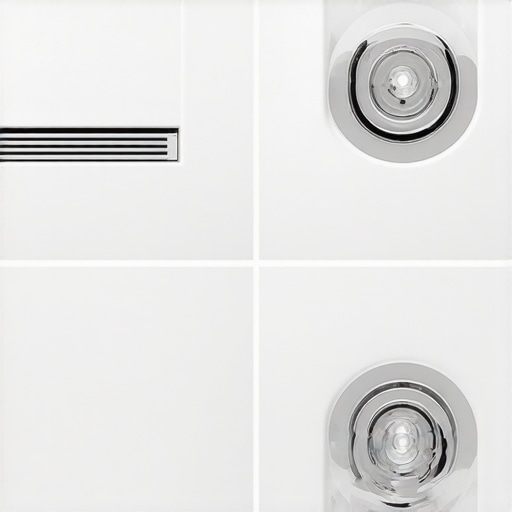
The structural reality of water movement
Linear drains and center drains represent two fundamentally different approaches to hydrostatic management and subfloor geometry in modern shower construction. Choosing between them requires an understanding of gravitational flow, tile dimensions, and the ANSI A108 standards for wet area waterproofing and mortar bed preparation.
I spent three days grinding concrete on a job last month just so the floor wouldn’t click like a castanet. Most guys skip the leveling compound. They think the underlayment will hide the dip. It won’t. When you are standing in a shower, you are standing on a structural assembly that has to move thousands of gallons of water over its lifespan without a single drop penetrating the joists. I have seen the rot that happens when a center drain is installed with a lazy pitch. It is not just about the chrome or matte black grate you see on the surface. It is about the mud bed, the pre-slope, and the bond between the thin-set and the waterproofing membrane. If you do not respect the physics of the slope, the most expensive marble in the world will not save your subfloor from turning into mush.
The envelope cut and the center drain burden
A center drain requires a four-way pitch or compound slope, meaning the subfloor or mortar bed must angle toward a central point from every corner of the shower enclosure. This necessitates an envelope cut for large format tiles to prevent lippage and ensure unbroken water flow. I have watched installers try to force a 12 by 24 inch porcelain tile into a center drain configuration without cutting it. You can’t do it. The tile will bridge the gap, leaving a void beneath it where water collects and bacteria breeds. To make a center drain work with anything larger than a 4 inch tile, you have to slice that tile on the diagonals, creating a look that some find cluttered. If you want those clean, modern designs for 2025, the center drain forces you into mosaic tiles. Mosaics are great for slip resistance because of the high grout density, but they are a nightmare for people who hate scrubbing. Every grout line is a potential failure point for moisture intrusion. You are looking at hundreds of linear inches of cementitious grout that need to be sealed and maintained. When the homeowner complains about grout restoration, it is usually because they chose a center drain and tiny tiles without realizing the maintenance debt they were signing up for.
“A floor is only as good as the subfloor beneath it; deflection is the enemy of every joint.” – Master Flooring Axiom
Linear drains and the single slope advantage
A linear drain functions on a single plane pitch, allowing the shower floor to be sloped in one direction toward a trench-style catchment. This enables the use of large format porcelain or natural stone slabs without the need for triangular cuts or diagonal breaks in the tile pattern. This is where the physics of the installation gets interesting. When you only have one slope, you eliminate the compound angles that cause lippage. It makes the installation of eco-friendly tile solutions much simpler. But do not think for a second that a linear drain is the easy way out. The subfloor has to be perfectly flat before you even think about the pitch. If the joists are crowned or the slab has a hump, the linear drain will highlight every flaw. I have seen guys try to build up the thin-set to compensate for a bad floor. That is a recipe for disaster. Thin-set is an adhesive, not a leveling agent. If it is too thick, it shrinks as it cures, pulling the tile down and breaking the bond. You need a self-leveling underlayment or a perfectly screeded mud bed to support a linear system.
The 1/8 inch that ruins everything
Subfloor deflection and improper pitch are the primary causes of standing water and waterproofing failure in high-end showers. A minimum slope of 2 percent or 1/4 inch per foot is required by TCNA guidelines to ensure effective drainage and prevent capillary action from pulling water into grout joints. If you are off by even an eighth of an inch over a four-foot span, the water will pool. In a linear drain setup, that pool will sit right at the edge of the drain or against the wall. This leads to efflorescence, which is that white, crusty mineral deposit that ruins the look of your chic baseboard designs near the shower entry. Water is a patient destroyer. It will find the smallest pinhole in your liquid-applied membrane. I always tell my clients that they aren’t paying for the tile; they are paying for the waterproofing system behind it. Whether you use a bonded flange drain or a clamping ring drain, the connection between the waste pipe and the floor must be hermetically sealed. I have seen the damage from weep hole blockages in traditional center drains. If the installer didn’t put gravel or spacers around those weep holes, the moisture stays trapped in the mud bed forever, eventually smelling like a swamp.
Technical Comparison of Drainage Systems
| Feature | Center Drain | Linear Drain |
|---|---|---|
| Slope Type | Four-way compound | Single-plane |
| Tile Restriction | Best with mosaics | Any size allowed |
| Installation Depth | Standard | Often requires recessed floor |
| Cost Factor | Lower material cost | Higher material cost |
| Flow Rate | Standard (approx 8 GPM) | High (up to 15+ GPM) |
How tile size dictates your drainage path
Tile geometry is the deciding factor for most drainage selections, as large format tiles cannot conform to multi-directional slopes without mechanical stress or physical cuts. If you are dead set on a 24 by 48 inch tile, you are getting a linear drain. There is no negotiation. If you try to center-drain a tile that big, you will have edges sticking up that will stub your toe every morning. We call that lippage, and in a shower, it is a trip hazard and a water trap. On the other hand, if you love the look of hexagon mosaics or penny rounds, a center drain is perfectly functional and much cheaper. But remember that tile cleaning tips always emphasize that more grout means more work. You have to weigh the cost of the drain against the cost of your time spent cleaning. A linear drain allows for minimalist grout lines, which is why it is the gold standard for trendy ideas for small bathrooms where you want the floor to look like one continuous piece of stone. It creates an illusion of space that a chopped-up center drain floor just can’t match.
“The shower pan must be sloped a minimum of 1/4 inch per foot toward the drain.” – TCNA Handbook Requirement
The chemistry of the bond and waterproofing
Waterproofing membranes like polyethylene sheets or polymer-modified liquids must be compatibly bonded to the drain flange to create a watertight vessel. You cannot just slap some silicone around the pipe and call it a day. I use modified thin-set that meets ANSI A118.15 standards because it has the flexural strength to handle the thermal expansion of the shower floor. Think about it. You turn on the hot water, the tile expands. You turn it off, it cools and shrinks. This happens every day. If your adhesive is brittle, it will crack. If your waterproofing isn’t integrated with the drain, that water will find its way into the subfloor. For curbless showers, which are almost always paired with linear drains, this is even more dangerous. You are essentially turning the whole bathroom into a wet room. You need to waterproof the entire floor, running the membrane up the walls and behind the baseboards makeover. If you don’t, the moisture will wick into the drywall in the bedroom next door. I have seen it happen. A beautiful shower that cost twenty grand, ruined because they didn’t think about capillary rise.
Maintenance and the reality of hair and debris
Drain maintenance differs significantly between point drains and linear systems, with trench drains requiring regular debris removal from a removable hair strainer to prevent clogging. People think linear drains are high maintenance, but they are actually easier to deal with if you are disciplined. You lift the grate with a little hook, pull out the basket, and dump the hair. With a center drain, the hair often gets past the grate and tangles in the P-trap. Then you are sticking a snake down there or pouring chemicals that eat away at your pipes. Neither is good. If you are worried about grout restoration secrets, the linear drain is your best friend because you have so little grout to manage. You can focus on refreshing grout in the corners and the wall joints rather than the entire floor. Use a high-quality epoxy grout for the best results in wet areas. It is waterproof, stain-proof, and won’t support mold growth. It is harder to work with, but once it is in, it is like iron.
Checklist for your drainage decision
- Determine if you want large format tile or mosaics.
- Check if your subfloor can be recessed for a curbless linear entry.
- Calculate the total GPM of your shower heads to ensure the drain can handle the volume.
- Evaluate your willingness to perform weekly hair-trap cleanouts.
- Verify that your installer is familiar with the specific waterproofing requirements for linear flanges.
- Consider the long-term cost of grout maintenance versus the initial cost of the drain hardware.
The choice between a linear and center drain is not just an aesthetic one. It is a decision that affects the structural integrity of your home. If you are building on a wooden joist system, you have to be extra careful about deflection. If you are on a concrete slab, you have more flexibility but more grinding and leveling work ahead of you. Whatever you choose, do not cut corners on the pre-slope. A flat floor is a failing floor. You need that water moving. If you have questions about specific installations or need to source specialized materials, feel free to contact us for expert guidance. We have seen every mistake in the book, and we are here to make sure you don’t make them. Your floor is a performance surface. Treat it like one. Avoid the trap of builder-grade thinking and invest in a drainage system that will last for decades, not just until the warranty expires. Take the time to read about how to refresh grout and maintain your shower investment. It will pay off in the long run when you don’t have to deal with mold, leaks, or structural rot.