
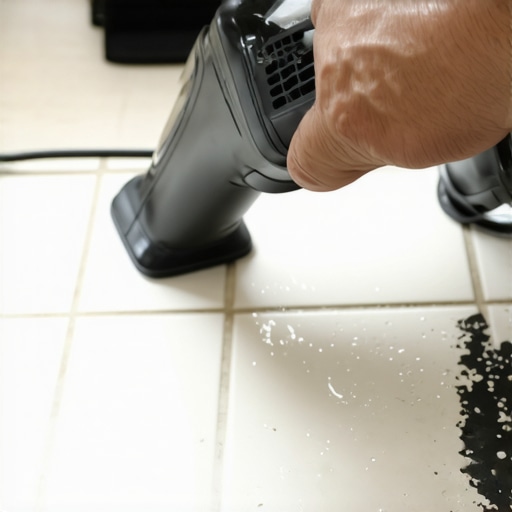
The physics of dirt entrapment in grout lines
To clean textured tile grout without heavy scrubbing, you must employ oxygenated chemical reactions or high-pressure steam that breaks the molecular bond between the soil and the porous cement surface. Most homeowners fail because they rely on mechanical friction rather than chemical dwell time. By using an alkaline-based cleaner with a pH of 10 or higher, you allow the solution to emulsify grease and lift carbon-based dirt from the microscopic voids within the grout. This method eliminates the need for wire brushes that damage the grout integrity and tile finish.
I spent three days grinding concrete on a job last month just so the floor wouldn’t click like a castanet, and during that time, I saw the homeowner trying to scrub their textured kitchen tiles with a toothbrush. They were sweating and cursing, yet the grout remained gray and dingy. I had to explain that they were fighting a losing battle against physics. Most guys skip the leveling compound and they definitely skip the chemistry lesson. Grout is not a solid plastic. It is a porous, cementitious matrix filled with tiny air pockets that act like a vacuum for dirty mop water. If you do not change the surface tension of the liquid sitting on that floor, you are just pushing mud from one hole to another. It is a structural failure of cleaning logic.
The microscopic trap within your grout lines
Grout is a mixture of Portland cement and sand that creates a rigid bridge between tiles but remains highly absorbent at a molecular level. When you have textured tile, the surface irregularities create miniature basins where sediment settles during routine mopping. This sediment consists of skin cells, kitchen oils, and mineral deposits from hard water. Because cement is alkaline, it reacts poorly to acidic cleaners like vinegar which actually dissolve the calcium carbonate that holds the grout together. This leads to crumbling and even more porosity over time. You must respect the ANSI standards for tile installation and maintenance to ensure the floor lasts as long as the building foundation.
“Cementitious grout is inherently porous and subject to the laws of capillary absorption; the deeper the pore, the harder the extraction.” – Master Flooring Axiom
Why most scrubbing is a waste of energy
Traditional scrubbing focuses on the surface of the grout while leaving the deep-seated contaminants untouched within the capillary structure. You can use all the elbow grease in the world, but if the cleaner does not penetrate the pores, the dirt stays put. The texture on the tile complicates this by snagging brush bristles before they can reach the low points of the grout joint. This is why professionals use oxygen bleach, specifically sodium percarbonate, which releases oxygen bubbles upon contact with water. These bubbles physically lift the dirt to the surface through a process called effervescence, allowing you to simply wipe the residue away without a single back-breaking stroke.
If you want to understand the long-term impact of improper maintenance, look at how we refresh grout without replacing it using these professional techniques. It is about working with the material, not against it. When you fight the material, the material always wins. I have seen beautiful showers that wow become mold-infested eyesores in six months because the owners used the wrong cleaning agents that stripped the sealer and opened the floodgates for moisture.
The chemistry of dirt release through oxygenation
Oxygenated cleaners work by breaking the organic bonds of stains through oxidation, a process that requires zero mechanical force. When the oxygen ions encounter a stain, they break the chemical bonds of the chromophores, the parts of the molecules responsible for color. This is particularly effective for organic matter found in kitchens and bathrooms. You must let the solution dwell on the grout for at least 15 to 20 minutes. This is the secret that most people miss. They spray and they immediately start scrubbing. You have to let the chemistry do the heavy lifting for you. It is the difference between a clean floor and a destroyed back.
| Cleaning Agent | pH Level | Action Mechanism | Grout Safety |
|---|---|---|---|
| Distilled Vinegar | 2.5 | Acidic Dissolution | Dangerous (Causes Eroding) |
| Dish Soap | 7.0 | Surfactant Only | Safe (Weak) |
| Oxygen Bleach | 10.5 | Oxidation/Effervescence | Highly Safe/Effective |
| Chlorine Bleach | 12.5 | Corrosive Whitening | Harsh (Dries Grout) |
The physics of steam as a physical agitator
High-pressure steam cleaners utilize thermal expansion to force dirt out of the grout pores without the use of harsh chemicals. Water heated to over 200 degrees Fahrenheit expands and, when directed into the narrow grout line, it creates a localized pressure zone. This pressure pushes behind the dirt and forces it upward. For textured tile, steam is superior because the vapor can reach into the nooks and crannies of the tile face where a brush would simply skip over. It also sanitizes the surface, which is vital for tile cleaning tips for a sparkling bathroom in 2025 where hygiene is a priority.
However, you must be careful with steam if your grout is already damaged or if you have a cheap subfloor that cannot handle the moisture vapor. If your subfloor has high deflection, the steam can actually accelerate the failure of the bond between the tile and the thin-set. Always check the stability of your floor before hitting it with high heat. A stable floor is a cleanable floor. If the floor moves, the grout cracks, and once the grout cracks, no amount of steam will save it.
The truth about textured tiles and sediment
Textured tiles mimic natural stone or wood but create a topographical nightmare for cleaning because they increase the surface area for dirt to adhere to. In a flat tile installation, the squeegee or mop moves smoothly across the surface. With textured tile, every ridge is a dam. To clean these effectively, you need a microfiber mop that can contour to the shape of the tile. Avoid cotton mops at all costs. Cotton mops are essentially dirt transporters that deposit gray water into your grout lines. Using a microfiber system ensures that the suspended dirt is actually removed from the room rather than just redistributed. This is essential when working near chic baseboard designs that can be damaged by excessive moisture and dirty runoff.
Protecting the bond after cleaning
Once the grout is clean and dry, you must apply a high-quality penetrative sealer to close the capillary pores and prevent future staining. Cleaning grout without sealing it afterward is like washing your car and then driving it through a mud pit without a wax coat. The pores are now open and even more hungry for dirt. I prefer fluorochemical sealers because they provide oil and water resistance. This is the only way to maintain grout restoration secrets for the long haul. A sealed grout line allows you to clean up spills with just a damp cloth, effectively ending the need for heavy scrubbing forever. It is an investment in your future sanity.
- Vacuum the floor thoroughly to remove all loose grit before wetting the surface.
- Apply the oxygen bleach solution liberally and wait 20 minutes.
- Use a soft nylon brush only for the most stubborn spots.
- Rinse with clean, distilled water to avoid mineral buildup.
- Dry the floor with a clean microfiber towel to prevent water spots.
- Seal the grout once it has had 24 hours to fully dehydrate.
“A floor is only as good as the subfloor beneath it; deflection is the enemy of every joint and the source of every crack.” – TCNA Handbook for Ceramic Tile Installation
Regional considerations for grout health
In areas with high humidity, like the coastal regions or the swampy South, grout is prone to rapid microbial growth. The moisture in the air keeps the grout pores damp, providing a breeding ground for mold. In these climates, you must use a grout additive that includes antimicrobial properties. Conversely, in the dry heat of the Southwest, grout can dry out too quickly during the cleaning process, causing the cleaner to crystallize before it can work. You have to work in small sections and keep the surface misted. Whether you are dealing with showers with a style in a tiny apartment or a massive commercial kitchen, the environment dictates your cleaning strategy. Do not ignore the local climate. It lives in your floors just as much as you do.
The importance of baseboard integration
When you are cleaning grout near the edges of the room, you have to be mindful of your baseboards. Many cleaning solutions can strip the paint or swell the MDF of a baseboard if they are allowed to pool at the perimeter. I always suggest using a painter’s tape or a shield when applying heavy amounts of oxygenated cleaner near the walls. A clean floor looks terrible if the baseboards are water-stained and rotting. It is all part of the same structural system. If you treat the floor as an isolated component, you will fail. It is an integrated assembly of subfloor, adhesive, tile, grout, and trim. Respect the assembly and it will respect you. If you have questions about specific materials, you can always contact us for expert advice on flooring architecture.