
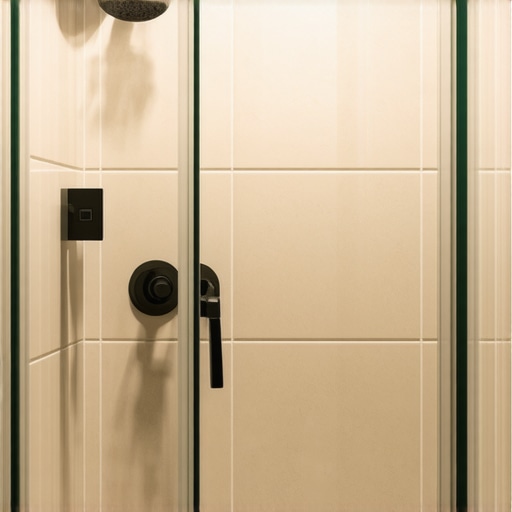
I spent three days grinding concrete on a job last month just so the floor would not click like a castanet. The owner wanted a high-end finish, but the subfloor was a rolling sea of hills and valleys. Most guys skip the leveling compound. They think the underlayment will hide the dip. It will not. That same logic applies to steam showers. People pick ceramic tile because it looks pretty and it is cheap, but they ignore the physics of the environment. I have been on my knees for twenty-five years with a moisture meter and a level, smelling like WD-40 and oak dust, and I can tell you that a steam shower is a different beast than a standard bath. It is a high-pressure, high-heat environment that will find every weakness in your installation. If you choose the wrong material, you are not just building a shower; you are building a mold incubator. Ceramic tile, specifically, has structural and molecular limitations that make it a risky bet for these specialized zones.
The myth of the waterproof ceramic tile
Ceramic tile is not inherently waterproof because its clay body is porous and can absorb significant amounts of moisture. While the glaze on top provides a water-resistant barrier, the sides and back of the tile remain open to capillary action. In a steam shower, water is not just liquid; it is a gas under pressure. That vapor penetrates the grout and works its way into the clay body of the tile. Over time, this saturation leads to the bond between the tile and the thin-set breaking down. I have seen $10,000 bathroom remodels fail because the installer did not understand the ISO 13006 standards. Ceramic tile usually falls into the non-vitreous or semi-vitreous category, meaning it has a water absorption rate higher than 3 percent. In a room that hits 115 degrees Fahrenheit with 100 percent humidity, that absorption rate is a death sentence for the installation. You need materials with a much tighter molecular structure to withstand the constant expansion and contraction cycles. If the tile body swells even a fraction of a millimeter, the grout lines will crack, and then the real trouble begins behind the wall. Looking at showers that wow often reveals a preference for porcelain for this very reason. Porcelain is fired at much higher temperatures, creating a dense, glass-like structure that resists vapor better than traditional ceramic ever could.
“A floor is only as good as the subfloor beneath it; deflection is the enemy of every joint.” – Master Flooring Axiom
Vapor pressure and the microscopic breach
Vapor pressure in a steam shower forces water molecules through the smallest pores in grout and tile glazes. Standard ceramic glazes are often full of microscopic pinholes that you cannot see with the naked eye. When the steam generator kicks on, the heat increases the kinetic energy of the water molecules, allowing them to zip right through those pinholes. Once the moisture is inside the tile body, it stays there. It cannot evaporate quickly because the shower stays humid. This creates a state of permanent saturation. I have pulled ceramic tiles off steam shower walls that were so waterlogged they felt twice as heavy as they did when they were dry. This weight puts extra stress on the adhesive. If you used a standard modified thin-set instead of a high-performance epoxy or a specialized vapor-shielding mortar, the tiles will eventually slide or pop off. You also have to consider the baseboards makeover ideas you might be planning for the adjacent area; if moisture escapes the steam enclosure, it will rot out your trim faster than you can say termite damage. The science of vapor transmission is why the Tile Council of North America has such strict rules for steam room assemblies.
Comparison of shower surfacing materials
| Material Property | Ceramic Tile | Porcelain Tile | Natural Stone | Glass Tile |
|---|---|---|---|---|
| Water Absorption | 3.0% to 7.0% | Less than 0.5% | 1.0% to 5.0% | 0.0% |
| Vapor Permeability | High | Very Low | Moderate | Zero |
| Thermal Expansion | Moderate | Low | Low | High |
| Firing Temperature | 1,800 F | 2,400 F | N/A | N/A |
The grout liability in high heat zones
Grout is the weakest link in any tile installation and becomes a major liability in the presence of pressurized steam. Most installers use cementitious grout because it is easy to work with and cheap. However, cement is naturally porous. It acts like a wick, pulling moisture into the wall cavity. In a steam shower, that wicking action is accelerated. If the grout is not sealed perfectly, or if that sealer wears off, you are in trouble. Even the best grout restoration secrets cannot fix a grout line that is being attacked by vapor from the inside out. When steam gets behind the tile through the grout, it can condense into liquid water. This liquid has nowhere to go. It sits against the waterproofing membrane, or worse, the wall studs. I always recommend epoxy grout for steam environments. It is a chemical bond, not a mechanical one. It is non-porous and resists the high temperatures of a steam generator. It is harder to install and costs more, but it is the only way to ensure the system does not fail within five years. You also have to be careful with tile cleaning tips because harsh chemicals can degrade standard grout and make it even more porous over time.
The ghost in the expansion gap
Thermal expansion causes ceramic tiles to grow and shrink during every steam cycle, leading to tenting or cracking. Everything expands when it gets hot. Ceramic tiles have a specific coefficient of thermal expansion. In a standard shower, the temperature change is gradual and limited. In a steam shower, the rise is rapid and extreme. If the installer did not leave proper expansion joints at the corners and where the floor meets the wall, the tiles will push against each other. This is called tenting. I have seen tiles literally jump off the wall because they had no room to move. You need a 100 percent silicone sealant in all change-of-plane joints, not grout. Grout is rigid; silicone is flexible. Using eco-friendly tile solutions can sometimes mean using recycled glass, but glass has an even higher expansion rate than ceramic, making the joint design even more vital. If you do not account for the 1/8 inch of movement, the whole system will eventually shatter.
“Steam is a gas, and gas will find the path of least resistance through any porous substrate.” – TCNA Technical Manual
The 1/8 inch that ruins everything
Precision in the subfloor and wall prep is the difference between a lifetime shower and a remodel nightmare. If your walls are not perfectly plumb, or if your floor has a slight dip, the tile will have voids in the thin-set behind it. These voids are the perfect place for condensation to collect. In a steam shower, these puddles of water behind the tile never dry out. They turn into a swamp. I spent a week last summer gutting a shower where the guy used a notched trowel but did not collapse the ridges. The steam filled those ridges, and the mold was so thick it looked like moss. You need 95 to 100 percent mortar coverage in a steam room. No exceptions. No spots. No voids. If you are updating your space, look at how to refresh grout carefully, but remember that surface fixes do not solve structural moisture issues.
- Use a vapor-proof membrane with a perm rating of 0.5 or less.
- Select porcelain or glass tile over ceramic for lower absorption.
- Apply epoxy grout to eliminate moisture wicking through joints.
- Ensure 100 percent thin-set coverage to prevent internal condensation.
- Allow for double the standard acclimation time for all materials.
- Install a sloped ceiling to prevent hot rain from dripping on the user.
Better alternatives for high heat zones
Porcelain and large format sintered stone are superior to ceramic because of their density and lack of pores. If you are dead set on a certain look, try to find it in a porcelain body. Porcelain is basically ceramic’s over-achieving cousin. It is fired longer and hotter, which makes it much more durable. Another great option is glass, though it is a pain to install. Glass has zero porosity. No steam is getting through a glass tile. However, the adhesive shows through, so you need a master to set it. If you are looking for showers with a style that lasts, large format slabs are the current gold standard. Fewer grout lines mean fewer points of failure. Every grout line is a potential leak. If you can do a whole wall with two or three slabs of porcelain, you have effectively removed 90 percent of the risk. Just make sure your baseboards match the quality; chic baseboard designs should be moisture-resistant if they are anywhere near the steam room door. The humidity in a bathroom with a steam shower can easily reach 70 percent even outside the enclosure. In places like Houston or New Orleans, this is even more dangerous because the ambient humidity is already high. You are fighting a war against water, and ceramic tile is like bringing a paper shield to a sword fight. Stick to the high-density stuff, use the right chemistry for your glue, and for heaven’s sake, level your subfloor before you start. It is the only way to sleep at night knowing the floor won’t start clicking or the walls won’t start weeping. “