
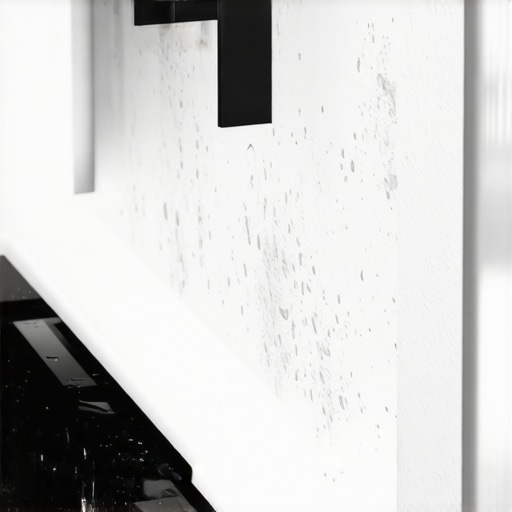
I once walked into a house where a expensive wide plank walnut floor was cupping so bad it looked like a potato chip because the installer didn’t check the crawlspace humidity. It was a disaster. That same homeowner had just installed a custom shower with matte black fixtures that looked like they were fifty years old after only two weeks of use. They were covered in white, crusty rings and grey streaks. The homeowner was furious. They blamed the manufacturer. I told them the truth. Matte black is not a finish. It is a commitment to chemistry. I have spent twenty five years with sawdust under my nails and a moisture meter in my pocket. I have seen every trend come and go. People think waterproof means indestructible. They think matte means maintenance free. They are wrong. A floor is only as good as the subfloor beneath it. A fixture is only as good as the water running through it. In this analysis, I will explain why your sleek bathroom hardware is failing the eye test and how the physics of evaporation ruins the aesthetic of modern design.
The physics of the flat finish
Matte black fixtures show water spots because their microscopic surface topography is rough rather than smooth. Unlike polished chrome which reflects light and sheds water, matte finishes trap mineral deposits in tiny valleys on the surface. When water evaporates, it leaves behind calcium and magnesium that bond to these peaks. Most people assume a smooth surface is the same as a flat surface. In the world of industrial coatings, they are opposites. A polished chrome fixture is a mirror. At a molecular level, it is a series of flat planes that allow water to bead and roll off via gravity. Surface tension on chrome is high. This prevents the water from clinging. Matte black is different. To achieve that non reflective look, the manufacturer creates a surface that is jagged. It is like a mountain range under a microscope. When a droplet of water sits on this surface, it becomes pinned. It cannot roll off. It stays there until the H2O molecules transition from liquid to gas. What remains is the ghost of your water. This is usually calcium carbonate. On a dark background, this white mineral stands out like a flare in the night.
“A floor is only as good as the subfloor beneath it; deflection is the enemy of every joint.” – Master Flooring Axiom
The ghost in the expansion gap
Hard water minerals are the primary culprit behind the white spotting seen on dark fixtures. These minerals represent dissolved rock that recrystallizes once the moisture carrier evaporates from the surface of your shower or sink. The contrast between the dark pigment and the light mineral creates a visual eyesore. When we talk about showers that wow modern designs for 2025, we often ignore the chemical reality of the local municipality. If you live in a region with high mineral content, like the limestone heavy areas of the Midwest or the Southwest, your matte black fixtures are essentially acting as a collection plate for dissolved stone.
The rough topography of matte coatings
The manufacturing process of matte black hardware often involves powder coating or Physical Vapor Deposition that creates a porous tactile feel. This porosity allows soaps and oils to lodge deep within the finish, creating a cloudy appearance that is difficult to remove without damaging the underlying coat. I tell my clients that if they want that clean, minimalist look, they need to understand the trade off. You cannot have a non reflective surface that is also hydrophobic by nature. The very thing that makes it look cool is what makes it a magnet for grime. It is the same logic I use when explaining why a rough, hand scraped floor hides scratches but catches every bit of dust. You are trading one problem for another. Most homeowners treat their bathroom like a car wash. They spray it down and walk away. That is a recipe for failure with matte black.
Why your shower tile makes it worse
The interaction between water runoff from your tile and the fixtures can accelerate mineral buildup. If your tile is not pitched correctly or if your grout is absorbing too much moisture, the humidity in the shower remains high for hours, slowing the evaporation process and allowing minerals to bond more tightly. Proper tile cleaning tips for a sparkling bathroom in 2025 always include a discussion on moisture management. If the air in your bathroom stays at eighty percent humidity because your fan is weak or your grout is holding water, those spots on your matte black faucet will become permanent. High humidity allows the mineral slurry to sit on the metal for a longer duration. This gives the calcium time to find a mechanical bond with the coating. If you want to keep things clean, you need to manage the environment, not just the fixture.
The baseboard moisture trap
Baseboards in a bathroom often act as the first indicator of excessive moisture that also affects your fixtures. When water spots appear on matte black, you should also inspect your baseboards for swelling or paint failure, as these are signs of poor ventilation and high mineral saturation. I have seen guys install beautiful chic baseboard designs that transform rooms in 2025 only to have them rot out because they didn’t seal the bottom edge. In a bathroom, everything is connected. If you are seeing water spots on your fixtures, you are likely seeing grout degradation as well. You might need to look into grout restoration secrets for long lasting results to ensure the entire system is sealed. A leaking shower pan or a poorly grouted corner will keep the room damp. That dampness is the enemy of a clean matte finish.
| Finish Type | Janka Equivalent Hardness | Mineral Visibility | Maintenance Level |
|---|