
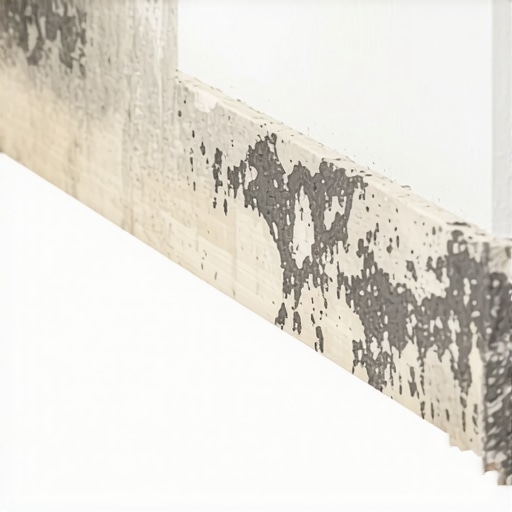
Most guys skip the leveling compound. They think the underlayment will hide the dip. It won’t. I spent three days grinding concrete on a job last month just so the floor wouldn’t click like a castanet. That job taught the client that shortcuts cost double in the end. When you see black lines creeping along your baseboards, you are not just looking at a cleaning problem. You are looking at a structural failure. It is the visible ghost of moisture and poor prep. I have spent 25 years on my knees looking at these failures. I smell the dampness before I see the mold. Flooring is not just a surface. It is a system of layers that must breathe and move together. If one part fails, the whole thing rots. People want pretty floors but they forget about the physics happening beneath their feet.
The biological reality of dark sealant
Black baseboard caulk is caused by the growth of mold and mildew trapped within the porous structure of the sealant or behind the baseboard itself. This occurs when moisture, organic dust, and warmth combine to create a breeding ground. Common culprits include high humidity, subfloor moisture, and improper caulking techniques. Mold spores are everywhere in the air. They need food and water to thrive. The dust that settles on your baseboards is food. The moisture wicking up from a damp concrete slab or a leaking shower pan is the water. When these meet, the mold colonizes the sealant. It does not just sit on top. It grows through the polymer chain. You cannot just wipe it off. It is alive and it is winning. You have to understand the chemistry of the bond to fight back.
Why your subfloor is lying to you
Subfloors often harbor hidden moisture that migrates upward through capillary action, saturating the baseboards and the sealant from the backside. Even if the surface feels dry, the internal relative humidity of the slab can exceed 80 percent, leading to sealant failure and biological growth. Most installers do not own a moisture meter. They just slap the floor down. If you have a concrete slab, it is a giant sponge. It pulls water from the earth. If you did not put down a 6 mil poly vapor barrier, that water is going into your floor. It hits the baseboard. The baseboard is usually MDF or pine. Both are essentially sponges. When they get wet, they swell. The caulk is stretched beyond its limit. It cracks at a microscopic level. Those cracks are where the black mold starts. It is a slow death for your trim. You can find better ways to handle your trim in these baseboards makeover ideas to elevate your space which focus on proper material selection.
“A floor is only as good as the subfloor beneath it; deflection is the enemy of every joint.” – Master Flooring Axiom
The chemical failure of cheap latex
Inexpensive latex caulks lack the high polymer content and antimicrobial additives necessary to resist mold in high-moisture environments. These products shrink significantly as they cure, creating voids where water and organic debris accumulate, eventually leading to the black discoloration seen in bathrooms and kitchens. Standard painter’s caulk is for dry rooms. It is not for showers or damp floors. It is mostly water and filler. As it dries, it loses volume. It pulls away from the wall. You get a tiny gap. That gap is a highway for water. You need a high-grade siliconized acrylic or a 100 percent silicone. Silicone does not shrink. It is hydrophobic. Water rolls off it like a duck. If you used the five dollar tube from the big box store, you guaranteed a failure. You need the stuff that the pros use. This is particularly important for showers that wow modern designs for 2025 where moisture management is the top priority.
The ghost in the expansion gap
The expansion gap is the space left between the flooring and the wall to allow for natural movement. If this gap is filled with the wrong material or compressed by debris, it creates pressure that breaks the sealant bond at the baseboard line. Floors move. Wood expands when the humidity goes up in the summer. It shrinks in the winter. If you jammed your flooring tight against the wall, it has nowhere to go. It pushes against the baseboard. The baseboard moves. The caulk snaps. Now you have an open wound in your room. Dust gets in. Water gets in. The mold moves in next. I always leave a quarter inch. I use a backer rod if the gap is too deep. A backer rod is a foam rope. It supports the caulk. It prevents three sided adhesion. If the caulk sticks to the floor, the wall, and the subfloor, it will tear. It should only stick to the wall and the top of the floor. That is the secret to a long life.
| Sealant Type | Moisture Resistance | Flexibility | Best Use Case |
|---|---|---|---|
| Standard Latex | Low | Low | Dry crown molding |
| Siliconized Acrylic | Medium | Medium | General baseboards |
| 100% Silicone | High | High | Showers and wet areas |
| Polyurethane | Very High | Extreme | Exterior transitions |
Water travel and the capillary effect
Capillary action allows water to travel vertically and horizontally through small spaces, such as the grout lines of a tile floor. This water often reaches the baseboard and becomes trapped, providing the consistent moisture source required for black mold to colonize the caulk. If your shower is nearby, check the grout. Grout is not waterproof. It is a hard sponge. If you did not seal it, it is sucking up water every time you step out of the tub. That water moves under the tile. It hits the wall. It wicks up the drywall and into the caulk. This is why you see black spots even when you haven’t spilled anything. You need to keep your grout in top shape. Look into grout restoration secrets for long lasting results to stop the water at the source. Once the water gets behind the baseboard, the only way to fix it is to rip it out. I have seen beautiful bathrooms ruined because someone forgot to seal a corner.
“Proper expansion space must be maintained at all vertical obstructions to prevent structural failure.” – NWFA Technical Manual
The 1/8 inch that ruins everything
A gap of only one eighth of an inch can hold enough water to sustain a mold colony for weeks. Inadequate sealant depth prevents the material from absorbing structural movement, leading to fissures that harbor bacteria and fungal growth. Most people think more caulk is better. It is not. The bead needs to be just right. Too thin and it snaps. Too thick and it never cures in the middle. I use a profiling tool to get a consistent depth. You want the caulk to be a bridge, not a dam. It needs to flex like a rubber band. If it is too rigid, it will crack. Those cracks are where the black gunk lives. You can try how to refresh grout without replacing it if the problem is just starting, but if the caulk is black all the way through, it has to go. Do not just caulk over the old stuff. That is like putting a clean shirt over a dirty body. It does not work.
Proper restoration and the zero threshold myth
Restoring blackened baseboard joints requires total removal of the old sealant, mechanical cleaning of the gap, and the application of a high quality antimicrobial product. Trying to bleach the surface is a temporary fix that fails to address the hyphae rooted deep within the polymer. You need to get a sharp knife. Cut it out. All of it. Use an oscillating tool if you have to. Then you scrub the area with a mold killer. Not just bleach. Bleach does not kill the roots in porous surfaces. You need a fungicide. Let it dry for 48 hours. If you are in a humid place like Houston, use a fan. Once it is bone dry, you re-caulk. Use a product with a lifetime guarantee against mold. While you are at it, check your tile cleaning tips for a sparkling bathroom in 2025 to make sure your maintenance routine is not making the problem worse. Too much water during mopping is a common cause of black caulk. Stop drowning your floors.
- Remove every trace of old sealant with a scraper.
- Disinfect the joint with a dedicated fungicide or high strength vinegar.
- Ensure the area is completely dry before applying new material.
- Use a backer rod for gaps wider than one quarter inch.
- Select a 100 percent silicone sealant for high moisture zones.
- Tool the bead to ensure a tight mechanical bond with both surfaces.
- Avoid using the shower or mopping for at least 24 hours.
The final reality is that a floor is alive. It moves and breathes. If you treat it like a static object, you will fail. The black caulk is just the floor’s way of telling you that you missed a step. Usually, that step was moisture control. Whether it is the slab or the shower, water is the enemy. Respect the expansion gaps. Use the right chemistry. Stop buying the cheap tubes. My knees hurt from fixing mistakes that could have been avoided with a ten dollar tube of better silicone and a bit of patience. Do it right the first time or you will be doing it again in six months.