
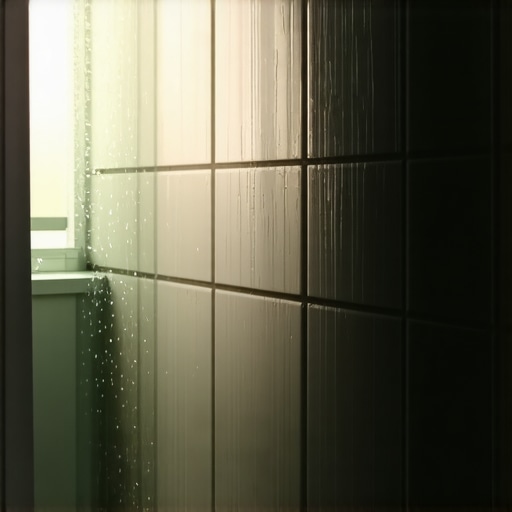
Why Your Bathroom Mirror is Fogging the Wall Behind It
Most guys skip the leveling compound. They think the underlayment will hide the dip. It won’t. I spent three days grinding concrete on a job last month just so the floor wouldn’t click like a castanet. That job was in a high humidity coastal condo where the owner complained about a smell of damp wood. When I pulled up the mirror above the vanity, the drywall was black with mold. The homeowner thought the mirror was the problem. The mirror was just the victim of a structural failure in the moisture barrier. They didn’t realize that the moisture wasn’t just on the mirror. It was living behind it. Flooring and walls are a system, and when one part fails, the whole room starts to rot from the inside out.
The physics of trapped moisture
Bathroom mirrors fog the wall behind them because of thermal bridging and vapor pressure differentials that occur when warm moist air meets cool surfaces. This phenomenon happens when the wall temperature is below the dew point of the air in the room. Moisture migrates into the gap between the mirror and the wall where air circulation is restricted. Without airflow, the water molecules cannot evaporate. They condense into liquid water that saturates the drywall and creates a breeding ground for mold spores. The temperature of the wall acts as a magnet for humidity. This is not just an aesthetic issue. It is a sign that your ventilation and wall assembly are failing to handle the latent heat and moisture generated by modern high flow showers.
When you look at a mirror, you see a reflection, but as a guy who has spent twenty five years looking at the guts of a house, I see a thermal barrier. Mirrors are typically mounted with a small air gap or with mastic. If the mastic is applied in blobs, it creates small pockets of stagnant air. In a bathroom environment, the relative humidity can spike to ninety percent in minutes. This air is heavy with water vapor. The vapor pressure pushes this moisture into every crevice. If your bathroom lacks a properly rated vapor retarder behind the drywall, that moisture moves right into the studs. I have seen 2x4s that looked like they had been sitting in a swamp because of a fogging mirror. The science of psychrometrics tells us that air will always seek equilibrium. If the wall is cooler than the air, moisture will move toward that wall with mechanical force.
The microscopic failure of bathroom grout
Grout joints fail at a microscopic level when the polymer chains are broken down by excessive moisture or when the porosity allows water to bypass the tile surface. Cementitious grout is naturally porous and acts like a hard sponge that wicks moisture into the substrate. If the grout is not sealed or if the mixture was too thin during installation, it will allow vapor to penetrate the wall cavity. This contributes to the overall humidity level in the wall assembly behind your mirror. Maintaining the integrity of these joints is the only way to prevent structural decay. You can learn about keeping these surfaces intact by looking into grout restoration secrets for long lasting results which focuses on the chemical bonds of the sealer.
“A floor is only as good as the subfloor beneath it; deflection is the enemy of every joint.” – Master Flooring Axiom
The ghost in the expansion gap
The expansion gap is a mandatory 1/4 inch or 3/8 inch space around the perimeter of a floor that allows for the natural movement of materials. If this gap is filled with debris, grout, or improper caulking, the floor will buckle. In a bathroom, this gap often becomes a highway for moisture to travel from the floor level up into the wall behind the baseboards and mirrors. The ghost in the gap is the unseen air movement that carries humid air into the wall cavity. Most installers hide this gap with baseboards, but if the baseboard isn’t installed correctly, it just traps the rot. It is better to use high quality materials and follow the 2025 trends for baseboards makeover ideas to elevate your space to ensure a proper seal.
Showers and the aerosol effect
High pressure showers create a fine aerosol of water droplets that remain suspended in the air long after the water is turned off. These tiny droplets are much smaller than standard steam and can penetrate the smallest gaps in vanity mirrors and light fixtures. The sheer volume of water used in modern showers that wow modern designs for 2025 puts a massive load on the ventilation system. If the CFM rating of the exhaust fan is too low for the room square footage, the aerosol settles on the coolest surface, which is usually the glass mirror. This moisture then drips down the back of the mirror and sits against the wall. This is a mechanical failure of the room air exchange rate. You have to move the air or the air will move your drywall into a state of decomposition.
The structural reality of the subfloor
Subfloors must be perfectly level to within 1/8 inch over a 10 foot radius to prevent the vertical movement that breaks tile bonds. If the subfloor has a dip, the tile or vinyl will flex. This flexing creates microscopic cracks in the caulk lines where the wall meets the floor. These cracks are the primary entry point for moisture that eventually fogs the wall behind the mirror. I have stood on floors that felt solid but the moisture meter told a different story. In a bathroom, the subfloor is the foundation of the moisture management system. Using eco friendly tile solutions for sustainable homes in 2025 can help, but if the concrete slab is pumping moisture from the ground through capillary action, no tile will save you. You need a vapor barrier with a perm rating of less than 0.1.
| Material | Permeability Rating | Janka Hardness (if applicable) | Acclimation Time |
|---|---|---|---|
| Solid White Oak | 0.5 – 1.0 | 1360 lbf | 10-14 Days |
| Porcelain Tile | < 0.01 | N/A | None |
| Engineered Wood | 0.5 – 0.8 | 1200+ lbf | 3-5 Days |
| LVP (Stone Core) | < 0.05 | N/A | 48 Hours |
Why your subfloor is lying to you
Concrete slabs may look dry on the surface while holding a reservoir of moisture that will eventually destroy your bathroom walls. This is known as hydrostatic pressure or vapor emission. I always use a calcium chloride test or an in-situ RH probe before I even think about laying a floor. If the slab is emitting more than three pounds of moisture per thousand square feet, that moisture has to go somewhere. It travels up the wall. If you have a mirror mounted on that wall, the moisture gets trapped. Many people think a thick underlayment will help. This is a mistake. While most people want the thickest underlayment, too much cushion actually causes the locking mechanisms on LVP to snap under pressure. The same applies to the wall, you need a tight, vapor-sealed assembly, not more padding.
“Moisture in the subfloor is the primary cause of flooring failure and subsequent structural decay in wet environments.” – TCNA Handbook for Ceramic, Glass, and Stone Tile Installation
The 1/8 inch that ruins everything
A 1/8 inch gap in the silicone bead at the base of a mirror or along a baseboard is enough to let gallons of moisture into the wall over a year. This is where the mechanics of the room break down. I have seen beautiful showers with a style trendy ideas for small bathrooms ruined because the installer forgot to caulk the top of the baseboard. When you mop the floor or when steam condenses on the walls, that water runs down. It hits that 1/8 inch gap and disappears into the drywall. Then the mirror starts to fog. Then the paint starts to peel. To prevent this, you should look at tile cleaning tips for a sparkling bathroom in 2025 to ensure you aren’t using chemicals that degrade your silicone seals. A degraded seal is an open door for rot.
- Check the exhaust fan CFM rating for proper air exchange.
- Use a moisture meter to check the wall behind the mirror.
- Apply a high quality mold resistant silicone to all vertical and horizontal transitions.
- Ensure the mirror has a 1/4 inch air gap from the wall using spacers.
- Seal all grout lines with a penetrating sealer once a year.
- Keep the bathroom door open for at least thirty minutes after a shower.
The chemistry of the bathroom is a balance of heat, moisture, and airflow. When the mirror fogs the wall, the balance is gone. You are looking at a future repair bill for the subfloor and the wall studs. I have spent my life fixing these hack jobs where someone cared more about the color of the tile than the perm rating of the moisture barrier. Don’t be that homeowner. Address the fog before the fog becomes a fungus. The structural integrity of your home depends on how you handle the water you can’t see. Keep your grout tight, your baseboards sealed, and your mirrors vented. That is the only way to build a bathroom that lasts more than five years without smelling like a wet basement.