
I am standing here with the smell of WD-40 and oak dust on my shirt, looking at a bathroom floor that has been completely compromised by a plumbing issue most homeowners ignore until the tile starts to pop. You might think a slow drain is just a minor annoyance, but as a guy who has spent twenty-five years on my knees with a moisture meter and a level, I see it as a structural threat. I once walked into a house where a custom tile job was failing because the overflow gasket had been weeping for three years. The installer didn’t check the levelness of the subfloor, so the water pooled at the back of the tub, saturated the plywood, and turned the whole bathroom into a moldy mess. Most guys skip the leveling compound. They think the underlayment will hide the dip. It won’t. I spent three days grinding concrete on a job last month just so the floor wouldn’t click like a castanet, and that same level of precision is needed to understand why your bathtub is failing you today.
The gravity of a clogged overflow
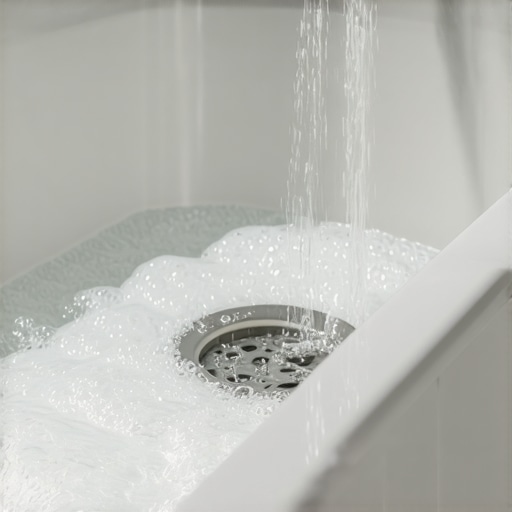
A bathtub draining slowly through the overflow occurs when hair clogs, soap scum, or a faulty trip lever obstructs the plumbing assembly. This restriction prevents the atmospheric pressure from pushing water through the waste and overflow pipe, leading to potential structural leaks and subfloor saturation. When you have a slow drain, the water backs up into the overflow pipe, which is rarely meant to handle constant, high-pressure flow. This pipe is often connected with a mechanical linkage that can corrode or catch debris. When hair catches on the linkage, it creates a dam. This dam slows the water, allowing minerals to build up, which eventually creates a solid mass that restricts the pipe. If you ignore this, the pressure can force water through the gaskets, which are often the weakest point in the entire assembly. This moisture then migrates into the subfloor, where the real damage begins.
Why your subfloor is lying to you
A bathtub resting on an unlevel subfloor creates structural stress on the drain assembly and the overflow gasket. If the joists show more than L/360 deflection, the movement can crack the plumber’s putty or the silicone seal, causing water to bypass the drain. I have seen subfloors that looked perfectly flat to the naked eye, but when I put a ten-foot straightedge on them, they had a half-inch dip right under the tub. This dip causes the tub to shift every time it is filled with eighty gallons of water. That shift pulls on the overflow pipe. Over time, that mechanical stress creates a slow leak. You won’t see a puddle on the floor. Instead, the water will travel along the underside of the tub and soak into the subfloor. This causes the wood fibers to swell and delaminate. By the time you notice the grout is cracking, the subfloor has already lost its structural integrity. You need to understand the physics of deflection to save your floor.
“A floor is only as good as the subfloor beneath it; deflection is the enemy of every joint.” – Master Flooring Axiom
How stagnant water kills your tile bond
The chemical bond of polymer-modified thin-set is destroyed when exposed to constant moisture and capillary action from a leaking overflow. This process leads to hydrostatic pressure that pushes the tile away from the substrate, resulting in hollow-sounding floors and cracked grout lines. When water leaks from a slow overflow, it gets trapped between the waterproof membrane and the subfloor. In many cases, installers use a topical membrane but forget to seal the penetrations around the pipes. The water finds that gap. Once it gets under the tile, it begins a process called leaching. This is where the water dissolves the minerals in the grout and thin-set. If you have been looking for grout restoration secrets for long lasting results, you must first stop the moisture source. No amount of new grout will fix a floor that is being fed by a leaking bathtub overflow. The moisture will simply rise through the new grout, carrying salts that create a white, powdery residue known as efflorescence.
The 1/8 inch that ruins everything
Maintaining a proper expansion gap of one-eighth inch at the perimeter is essential to prevent floor buckling when moisture from a slow drain expands the materials. This gap allows the subfloor and floor covering to move independently without binding against the baseboards or the tub flange, which prevents tenting and snapping of the locking mechanisms. When a tub drains slowly through the overflow, it creates a high-humidity environment in the bathroom. This humidity is absorbed by the baseboards and the flooring. If you have installed your baseboards too tight to the floor, or if you have no expansion gap, the floor has nowhere to go. It will push against the wall until the pressure causes the center of the room to rise. I have seen entire floors lift off the ground because an installer didn’t leave that small gap. You might consider chic baseboard designs that transform rooms in 2025, but ensure they are installed with the correct clearance to allow for this natural movement. The physics of wood and vinyl do not care about your aesthetic preferences; they will expand when wet.
| Material Type | Moisture Resistance | Typical Mil Thickness | Acclimation Time |
|---|---|---|---|
| Solid Hardwood | Low | 750 mil (3/4 inch) | 7 to 14 Days |
| Engineered Wood | Medium | 375 to 500 mil | 3 to 5 Days |
| Luxury Vinyl Plank | High | 20 to 30 mil (Wear Layer) | 2 Days |
| Porcelain Tile | Extreme | Varies | None |
The ghost in the expansion gap
The ghost in the expansion gap refers to invisible moisture vapor that travels through the subfloor and collects under floating floors when a bathtub overflow is restricted. This vapor transmission causes cupping and crowning in wood products and dimensional instability in vinyl, even if no liquid water is visible on the surface. You might think that because you have a modern shower setup, you are safe. If you have researched showers that wow modern designs for 2025, you know that waterproofing is the most talked-about feature. However, the plumbing behind the wall is where the ghost lives. A slow drain through the overflow means water is sitting in that pipe longer than it should. If there is a pinhole leak or a loose joint, that vapor is constantly feeding the environment under your floor. It is like a slow-motion car crash for your flooring. You need to monitor the relative humidity of your crawlspace or the moisture content of your slab. If the slab is over 4 percent moisture, your floor is at risk.
“A floor must be allowed to breathe or it will eventually gasp for air through the joints.” – NWFA Structural Principle
- Inspect the overflow gasket for signs of dry rot or cracking every year.
- Clear the mechanical linkage of the drain to ensure full water flow.
- Check the baseboards for swelling which indicates moisture migration.
- Verify that the bathtub is level to prevent water from pooling at the overflow.
- Ensure the subfloor has been tested for moisture before any tile repairs.
When you deal with these issues, you are not just fixing a drain. You are performing structural surgery on your home. I have seen the way water can travel through a house, following the path of least resistance until it finds a way to ruin a beautiful installation. If you are struggling with these issues or need professional guidance on how to restore your bathroom after a leak, you should contact us to discuss the best path forward. Do not let a slow drain become a full floor replacement. The chemistry of your adhesives and the physics of your subfloor depend on a dry environment. Take the time to clear the pipes and level the floor. Your home will thank you for it in a decade when the tiles are still tight and the floor doesn’t squeak. This is how we build things that last. We do not take shortcuts. We do not ignore the slow drain. We respect the materials and the standards that govern them.