
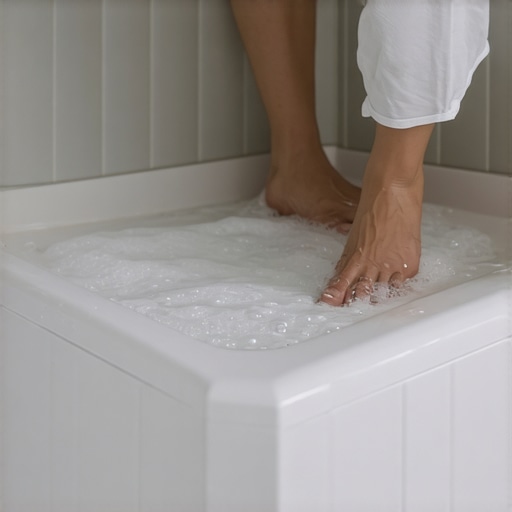
Why Your Shower Pan Is Creaking When You Step In
You step into the shower and hear a rhythmic, groan-inducing click. It happens every single morning. It is not just an annoyance. It is the sound of structural failure. Most homeowners assume the noise is just the plastic house settling. They are wrong. As a floor installer who has spent twenty-five years diagnosing subfloor rot and failed waterproofing, I can tell you that a creak is a warning. It is the sound of materials rubbing together that should be bonded for eternity. If your shower pan moves, your grout will crack, your waterproofing will fail, and eventually, your subfloor will rot.
Most guys skip the leveling compound. They think the underlayment will hide the dip. It won’t. I spent three days grinding concrete on a job last month just so the floor wouldn’t click like a castanet. I have seen million-dollar bathrooms ruined because an installer was too lazy to mix a forty-pound bag of mortar for a base. If you want to know why your shower is talking back to you, we have to look at the physics of the assembly, the chemistry of the bond, and the geometry of the subfloor.
The hollow sound of a failing foundation
Shower pan creaking usually indicates subfloor deflection or void spaces in the mortar bed. When a prefabricated base lacks a solid support structure, the fiberglass or acrylic flexes under weight. This movement causes friction against the subfloor, studs, or drain pipe, leading to audible noise. Most acrylic or fiberglass pans are designed with integral ribs on the bottom. These ribs are meant to provide rigidity. However, unless they are seated in a bed of thin-set or mortar, they only touch the high spots of the subfloor. When you step on a spot that is not supported, the pan bows. That bowing is the source of the sound. If you are dealing with a tiled floor, you might also be looking at how to refresh grout without replacing it, but if the noise is structural, new grout is just a temporary bandage.
“A floor is only as good as the subfloor beneath it, deflection is the enemy of every joint.” – Master Flooring Axiom
The National Wood Flooring Association and the Tile Council of North America have strict rules about deflection. For a tile installation, the floor must meet a minimum of L/360. This means the floor should not bend more than the length of the span divided by 360 when under a heavy load. If your joists are too small or spaced too far apart, the entire floor system dips. A shower pan is a rigid unit. It does not want to dip. When the house moves and the pan stays stiff, the friction creates that high-pitched squeak. In many modern showers that wow modern designs for 2025, installers are moving toward thicker, more rigid materials to combat this exact issue.
The physics of deflection and mortar voids
Subfloor preparation determines the lifespan of the entire bathroom. If the subfloor is plywood, OSB, or concrete, it must be perfectly level and structurally sound. A mortar bed acts as a bridge between the uneven subfloor and the rigid shower base. Without this bridge, the base is suspended over air pockets. When we talk about the molecular reality of a shower, we are talking about PSI. A human being standing on one foot can exert significant pressure on a small surface area. If that area is over a void, the acrylic stretches. Over time, this stretching leads to stress fractures. Stress fractures lead to leaks. Leaks lead to the demolition of your home. It is a simple, brutal chain of events.
We also have to consider the drain assembly. The drain is the only part of the shower pan that is physically bolted to the plumbing. If the pan moves but the pipe is rigid, you get a creak at the gasket. This is extremely dangerous. Constant movement against a PVC or ABS drain fitting will eventually shear the seal. You won’t see the leak immediately. It will drip into the subfloor, soaking the wood and inviting carpenter ants or mold. By the time you notice the water stain on the ceiling below, you are looking at a five-figure repair bill. People often look for grout restoration secrets for long lasting results, but no amount of grout sealer can stop a leak caused by a moving drain.
The chemistry of the mortar bed
Modified thin-set and Portland cement are the chemical anchors of a stable shower. Using a polymer-modified mortar allows for a slight flex without debonding. If an installer used cheap sand-mix or plaster, it can crumble over years of thermal expansion and contraction. Every time you turn on the hot water, the shower pan expands. Every time it cools, it shrinks. If the mortar bed is low-quality, it turns to dust. Once it is dust, it no longer supports the ribs of the pan. You are then left with a hollow cavity that echoes and creaks. If you are interested in eco friendly tile solutions for sustainable homes in 2025, ensure you are choosing high-quality, low-VOC mortars that maintain their structural integrity for decades.
| Base Material | Rigidity Rating | Typical Lifespan | Creak Risk |
|---|---|---|---|
| Acrylic | Moderate | 10 to 15 Years | High |
| Fiberglass | Low | 8 to 12 Years | Very High |
| Cast Iron | Extreme | 50+ Years | Very Low |
| Custom Tile (Mortar) | High | 25+ Years | Medium |
The 1/8 inch that ruins everything
Precision leveling is not a suggestion in bathroom construction. If a subfloor is out of level by just 1/8 inch across the span of the shower, the base will not sit flush. This gap is the birthplace of the creak. I have seen guys try to shim a shower pan with scraps of wood or cardboard. It is a joke. Wood shims compress. Cardboard rots. The only way to fix a level issue is with a self-leveling underlayment or a properly screeded mud bed. When you are looking at showers with a style trendy ideas for small bathrooms, remember that the smaller the space, the more noticeable the imperfections become.
We also need to talk about the perimeter. If the shower pan is rubbing against the wall studs, it will squeak. There should be a tiny gap between the flange of the pan and the framing, which is then covered by your backer board and tile. If the installer jammed the pan tight against the studs, the house shifting will cause a rubbing sound. It sounds like a haunted house, but it is just bad carpentry. This movement can also affect your trim. If the floor moves, it can pull away from the wall, making chic baseboard designs that transform rooms in 2025 look poorly installed because of the shifting gaps.
The Checklist for a Silent Shower
- Verify the subfloor is L/360 compliant and free of rot.
- Apply a high-quality primer before using self-leveling compounds.
- Always set the shower base in a wet bed of mortar or thin-set.
- Ensure the drain assembly is lubricated and tightened to manufacturer specs.
- Leave a 1/16 inch expansion gap at the wall flange.
- Test the pan for movement before installing the wall tile.
Why your subfloor is lying to you
Moisture content in the subfloor changes the geometry of the wood. If you install a shower pan over damp plywood, that plywood will shrink as it dries. This creates a void where there was once solid contact. In humid regions, this is a constant battle. The wood absorbs atmospheric moisture, swells, and then contracts when the air conditioner kicks in. This cycling is why floors that were silent in the summer might start screaming in the winter. Professionals use moisture meters to ensure the subfloor is within 2 percent of the finished flooring or the specified ambient range before they ever mix a bucket of mud. If you need help with a renovation, you can always contact us to discuss proper site preparation.
“Deflection is the silent killer of the modern bathroom; if the substrate moves, the system fails.” – TCNA Handbook Adaptation
The information gain here is simple but often ignored. Most people think the thickest, most expensive foam underlayment will stop noise. In reality, too much cushion in a shower area is a disaster. You want zero compression. Any compression allows the pan to move. Movement leads to the failure of the waterproof seal. You want a rock-solid, non-compressible foundation. If you can feel the floor give under your weight, it is not a floor, it is a trampoline. And trampolines do not hold water. When thinking about baseboards makeover ideas to elevate your space, remember that a stable floor keeps everything else in alignment, from your grout lines to your trim work.
The ghost in the expansion gap
Thermal expansion is a physical law that installers often ignore. Materials expand when heated by hot shower water. If the shower pan is trapped between tightly screwed wall panels and a solid subfloor, the energy has nowhere to go. It bows the material upward. This upward tension is released when you step on it, creating a snap or pop. It is the same principle as a metal cookie sheet popping in the oven. The solution is to allow for perimeter expansion. Siliconized caulk should be used at transitions rather than hard grout, as caulk allows for that microscopic movement without cracking or making noise. For more maintenance advice, see our tile cleaning tips for a sparkling bathroom in 2025 to keep those flexible joints clean and functional.
Ultimately, a creaking shower pan is a symptom of a shortcut. Whether it was a lack of mortar, a weak subfloor, or a poorly fitted drain, the noise is telling you that the installation is under stress. Do not ignore it. A silent shower is a safe shower. A noisy shower is a ticking clock. Fix the foundation, and the rest of the room will follow suit. Your floor is not just a surface. It is a structural engineering challenge that requires respect for the physics of weight and the chemistry of adhesion.