Stop Settling for Wood Trim and Embrace the Performance of Stone Baseboards
Most guys skip the leveling compound. They think the underlayment will hide the dip. It won’t. I spent three days grinding concrete on a job last month just so the floor wouldn’t click like a castanet. That job taught me that if the subfloor is junk, the finish is junk. My hands still have the white haze of dried mortar in the cracks of my skin from that project. I was installing heavy marble baseboards in a client’s foyer and the wall was so out of plumb it looked like a sail in a gale. We had to pack out the thin-set nearly an inch in some spots just to get a straight line. If we had used wood, it would have snapped or left a gap big enough to swallow a pencil. Stone doesn’t lie. It demands perfection from the subfloor and the wall framing, which is exactly why it is the only choice for a house that is built to last longer than a typical mortgage. Wood trim is essentially a sponge that you nail to the wettest part of your house. It is time to look at stone as the structural and aesthetic evolution of the perimeter.
The moisture trap at the bottom of your drywall
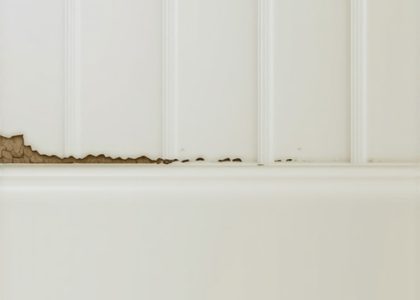
Stone baseboards create a permanent moisture barrier that prevents capillary action from drawing water into the gypsum core of your walls. Unlike wood or MDF which swell and delaminate when exposed to mopping or spills, stone is inert. This makes stone the ideal choice for high-traffic zones. [IMAGE_PLACEHOLDER] In the sweltering humidity of Florida or the coastal dampness of the Pacific Northwest, wood trim is essentially a breeding ground for mold. When water hits the bottom of a wood baseboard, the fibers expand. This expansion breaks the caulk seal at the top. Once that seal is gone, moisture travels behind the board and into the drywall. I have ripped out wood trim that looked fine from the outside, only to find the paper backing of the drywall was a black mess of spores. Stone eliminates this failure point entirely. By using a polymer-modified thin-set with a high C2TE classification, you create a bond that is waterproof and structurally sound. You should consider the baseboards makeover ideas to elevate your space which include stone options that provide this level of protection.
Porcelain plank baseboards and the zero absorption rule
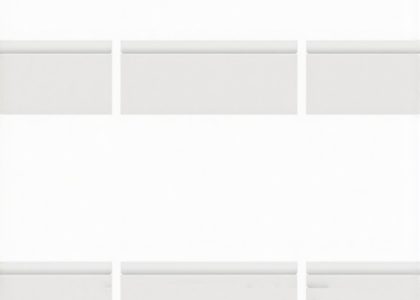
Porcelain baseboards offer a water absorption rate of less than 0.5 percent which makes them virtually impervious to any liquid. This technical specification is what separates high-density porcelain from standard ceramic or wood alternatives. You are looking for a material that can handle the chemicals in a mop bucket without staining. Porcelain is fired at temperatures exceeding 2,200 degrees Fahrenheit, resulting in a vitrified material that is harder than granite. It doesn’t scratch when the vacuum hits it. It doesn’t fade when the sun beats through the window. For a modern look, I recommend using 12×24 inch porcelain tiles ripped into 4-inch strips. This gives you a linear, minimalist look that eliminates the need for bulky quarter-round moldings. When you install these, you need a 95 percent mortar coverage on the back of the piece. If you leave voids, the stone can crack if it gets kicked or hit by a heavy piece of furniture. We call this the ‘hammer test’ in the trade. A well-set stone baseboard should feel like a part of the wall, not an attachment.
The technical reality of stone vs wood trim
| Feature | Wood/MDF Trim | Porcelain/Stone Trim | Why It Matters |
|---|---|---|---|
| Moisture Resistance | Very Low | High to Absolute | Prevents rot and mold growth. |
| Thermal Expansion | High | Very Low | Prevents gaps in corners. |
| Maintenance | Frequent Painting | Simple Cleaning | Reduces long-term home costs. |
| Impact Durability | Dents Easily | Highly Resistant | Survives vacuum cleaners and toys. |
Marble skirting and the flatness requirement
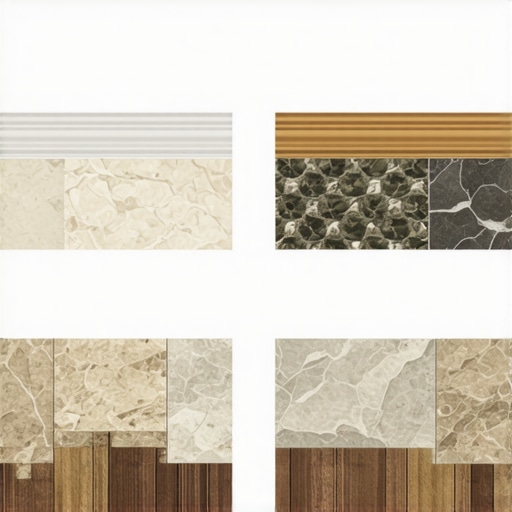
Marble baseboards provide a luxury aesthetic while offering a high compressive strength that protects the lower wall from impact damage. Because marble is a natural product, it requires a higher level of skill to install compared to a click-lock wood trim. You must ensure the wall is flat within 1/8 inch over 10 feet. If the wall is wavy, the marble will show a ‘lippage’ at every joint. This is where the physics of the installation come into play. You can’t just bend stone to follow a crooked wall. You have to float the wall out with mud or grind the high spots. Most homeowners think they want the thickest underlayment for their floors, but too much cushion actually causes the locking mechanisms on the floor to snap, and it creates a gap at the bottom of your stone baseboard because the floor is moving too much. You want a firm, level subfloor to support the weight of the marble skirting. If you are looking for design inspiration, the chic baseboard designs that transform rooms in 2025 often highlight these natural stone textures.
“A floor is only as good as the subfloor beneath it; deflection is the enemy of every joint.” – Master Flooring Axiom
Sintered stone and the future of zero maintenance
Sintered stone baseboards are the most durable option for 2026 because they combine the beauty of natural stone with an ultra-compact molecular structure. Materials like Dekton or Neolith are produced using a process called ‘Sintering’ which mimics the way metamorphic rock forms in nature but at a hyper-accelerated rate. The result is a board that is completely non-porous. You could spill red wine, oil, or even bleach on it and it won’t leave a mark. This is a far cry from wood trim that needs to be sanded and repainted every few years. When cleaning these surfaces, you should follow the tile cleaning tips for a sparkling bathroom in 2025 to ensure the grout stays as clean as the stone. In 2026, we are seeing a move toward ‘flush-mount’ stone baseboards where the stone is recessed into the drywall for a perfectly flat transition. This requires an architect’s eye and a precision carpenter’s hands because the framing must be exact.
The slate strip and the textured transition
Natural slate baseboards offer a rugged texture that hides dust and scuffs while providing a dense thermal mass for the home. Slate is a foliated metamorphic rock, which means it splits into thin layers. This gives it a unique, natural face that looks incredible in rustic or industrial designs. However, because slate is heavy, the adhesive chemistry is vital. You cannot use a cheap, multi-purpose mastic. You need a high-bond thin-set that can hold the weight of the slate on a vertical surface without sagging. If the installer doesn’t know what they are doing, those slate pieces will slide down the wall before the mortar sets. I always use a ledger board or spacers to keep the lines crisp. This is especially important when you are integrating these into showers that wow modern designs for 2025 where the baseboard might transition directly into a wet-room floor.
Essential toolkit for stone baseboard installation
- Wet saw with a diamond-rimmed blade for chip-free cuts.
- A 1/4 inch by 1/4 inch square-notched trowel for proper thin-set coverage.
- High-density polymer-modified thin-set (ANSI A118.15 compliant).
- Laser level to ensure a perfectly horizontal line across the room.
- Siliconized grout for the transition between the stone and the floor to allow for movement.
The 1/8 inch that ruins everything
Precision at the corners is the difference between a high-end stone installation and a DIY disaster. When you work with wood, you can use wood filler and paint to hide a bad miter. With stone, your cuts must be perfect. I use a 45-degree miter cut on the wet saw, but then I hand-grind the back of the miter with a diamond polishing pad to ensure the faces meet tightly. This is called ‘back-buttering’ the joint. If you have a 1/8 inch gap in a stone corner, no amount of grout will make it look right. It will always look like a mistake. You also need to consider the grout joints between the stone pieces. I prefer a 1/16 inch joint using unsanded grout to make the line almost invisible. If the grout starts to look dingy over time, you can use grout restoration secrets for long-lasting results to bring back that original look. Stone is a commitment to quality that wood simply cannot match.
“Movement joints are not optional; they are the lungs of a stone installation.” – TCNA Technical Bulletin
Regional climate logic and the death of MDF
The dry heat of Arizona or the intense humidity of Houston will cause wood and MDF baseboards to shrink or swell, but stone remains dimensionally stable. In a desert climate, wood trim shrinks so much that you will see a white line of unpainted wood at the joints by the second year. In a humid climate, the wood swells and the miters push against each other until they pop open. Stone doesn’t have this problem because its coefficient of thermal expansion is extremely low. Whether it is 100 degrees or 20 degrees, the stone stays the same size. This stability is why commercial buildings use stone or tile baseboards. They know they can’t afford to be repairing trim every time the seasons change. If you want a house that stands up to the environment, you ditch the wood and go with masonry. It is the structural choice for anyone who understands the physics of a building envelope. For any questions on how to implement these materials in your specific region, you can contact us for expert guidance.