Revolutionizing Bathroom Aesthetics with Waterproof Baseboards in 2026
As the demand for durable and visually appealing bathroom finishes escalates, the role of waterproof baseboards has evolved from merely functional components to critical elements that define design integrity and longevity. Industry experts recognize that selecting advanced materials for baseboards is integral to resisting moisture infiltration, preventing mold growth, and maintaining aesthetic appeal over time. The advent of innovative waterproof solutions has prompted architects and homeowners alike to reconsider traditional materials, emphasizing resilience against the challenges posed by high humidity and frequent water exposure in bathrooms.
Analyzing the Material Shift: From Wood to Synthetics and Composites
Traditional wooden baseboards, while iconic, fall short in moisture-rich environments, often succumbing to warping, swelling, or rot. In response, the industry has pivoted towards materials like PVC, composite polymers, and engineered stone. These materials offer superior waterproof properties and require less maintenance, aligning with sustainable and low-impact design principles. For example, high-density polyethylene (HDPE) and polypropylene composites offer excellent moisture resistance, structural stability, and ease of installation. Moreover, these synthetics can be manufactured with textured or painted finishes, mimicking natural wood without its vulnerabilities.
How Do Waterproof Baseboards Integrate with Modern Shower Designs and Tile Installations?
Integration of waterproof baseboards with shower configurations and tiled walls necessitates careful planning to ensure seamless moisture barriers. The application of high-quality waterproof sealants at joints, coupled with the use of corrosion-resistant fasteners and profiles, is essential. Expert consultations suggest that advanced waterproofing membranes, such as liquid-applied membranes, work synergistically with composite baseboards to create an impermeable enclosure. This integration is critical when considering the longevity of tile adhesives and preventing substrate damage, as discussed in detailed guides on tile grout maintenance.
The Role of Baseboard Design in Enhancing Bathroom Resilience
Beyond material selection, innovative design strategies focus on profiles that facilitate easy cleaning and resist moisture accumulation. Sculpted or rounded edges reduce water trapping, while concealed mounting systems minimize exposure to moisture ingress. Additionally, the integration of thermal break features in the profiles prevents temperature-related expansion and contraction, thus maintaining structural integrity over years of service. An argument is emerging that the visual harmony between baseboards, tiles, and shower enclosures significantly influences user perception and satisfaction, prompting a shift toward cohesive design approaches.
Addressing Challenges: Seamless Installation and Maintenance of Waterproof Bases
One of the persistent challenges in employing waterproof baseboards involves ensuring proper adhesion and sealing in irregular substrates. Professionals advocate for the use of multi-layered waterproofing membranes and compatible adhesives that accommodate substrate movement. Regular inspection and maintenance, including cleaning with non-abrasive solutions and periodic resealing, prolongs lifespan. When executed correctly, these measures lead to a marked reduction in grout degradation and moisture-related deterioration. For comprehensive strategies on grout maintenance, see tile grout maintenance tips.
What Future Trends Are Shaping Waterproof Baseboard Innovations in 2026 and Beyond?
Emerging trends include the adoption of flexible, high-performance PVC composites that mimic natural materials while offering unmatched durability. Furthermore, the integration of smart materials that respond to humidity levels, expanding or contracting to prevent moisture ingress, is gaining traction. The ongoing refinement of manufacturing processes aims to produce profiles that are both structurally resilient and aesthetically versatile, aligning with the broader movement towards sustainable and resilient bathroom environments.
For those interested in elevating their bathroom designs, exploring chic baseboard designs might offer inspiration. Industry leaders recommend consulting with professional architects and waterproofing specialists to tailor solutions that harmonize performance with style.
In sum, the transition to highly resistant waterproof baseboards is a testament to industry innovation driven by environmental necessity and aesthetic aspirations. Future-proofing bathroom environments entails embracing these material and design advancements, ensuring enduring beauty and performance.
Mastering Seamless Integration: Expert Tips for Installing Waterproof Baseboards
Achieving a flawless finish with waterproof baseboards requires meticulous planning and precision. Incorporating techniques such as using adhesive-backed moisture-resistant profiles and employing laser-guided tools ensures that the installation aligns perfectly with the surrounding tile and wall surfaces. Professionals emphasize the importance of prepping substrates thoroughly, applying appropriate primers, and selecting compatible sealants to prevent water ingress at joints and corners. For a comprehensive overview of advanced installation methods, consult tile grout maintenance resources that detail optimal sealing practices.
How Do Installation Techniques Affect Long-Term Durability of Waterproof Baseboards?
Proper installation techniques directly influence the longevity and performance of waterproof baseboards. Using innovative fastening systems like concealed mounting clips or snap-on profiles minimizes surface exposure to moisture, reducing the risk of mold development and substrate damage. Additionally, integrating adjustable profiles allows for accommodating slight shifts in the underlying substrate, preventing cracks or warping over time. Industry research advocates for a multi-layered approach, combining waterproof membranes with strategic sealing of all penetrations, to ensure a durable finish that withstands the test of time. To explore tailored solutions, consider reaching out through contact us.
What Strategies Are Transforming Waterproof Baseboard Maintenance and Repair in 2026?
Emerging maintenance methods leverage smart-grade sealants that detect and respond to moisture exposure, effectively creating self-healing seals around vulnerable joints. Additionally, advances in grout and sealant formulations facilitate easier reapplication without invasive removal, extending the intervals between repairs. Professional guidance suggests utilizing routine inspections with moisture meters and infrared cameras to identify early signs of degradation. For in-depth techniques, check out the sealant solutions that underpin these strategies. Embracing these innovations helps maintain pristine aesthetics and structural integrity, making bathroom upgrades a truly sustainable investment.
If you’re exploring ways to elevate your bathroom’s durability and style, exploring shower design trends can provide inspiring ideas for cohesive upgrades aligned with waterproofing advancements.
Unlocking the Power of Nanotechnology in Waterproof Baseboard Materials
Recent advancements have catapulted nanotechnology into the forefront of bathroom waterproofing innovations, offering unprecedented durability and resistance. Engineers are now embedding nano-coatings within composite baseboards, creating a barrier at a molecular level that repels moisture, inhibits mold growth, and maintains surface integrity under extreme humidity conditions. These coatings, often composed of silica or titanium dioxide nanoparticles, inherently possess antimicrobial properties, thereby reducing airborne mold spores and improving indoor air quality. As noted in a groundbreaking study published in the Journal of Materials Science and Engineering (2024), nano-enhanced composites not only extend service life but also facilitate easier cleaning, reducing long-term maintenance costs.
How Can Embedded Sensors Extend the Lifespan of Waterproof Baseboards?
Integrating smart sensor technology into waterproof baseboards signifies a paradigm shift from passive resistance to proactive maintenance. These sensors monitor parameters such as moisture levels, temperature fluctuations, and structural shifts in real-time, transmitting data to centralized home automation systems. Early detection of moisture ingress allows for targeted interventions before significant damage occurs, effectively preventing costly repairs and mold outbreaks. For instance, wireless humidity sensors embedded within baseboards can trigger automated ventilation or alert homeowners via smartphone apps when thresholds are exceeded. According to recent research from the Smart Building Association, properties equipped with such integrated systems observe a 40% reduction in mold-related issues over five years, highlighting the technology’s potential for long-term sustainability.
What Do Experts Say About the Future of Moisture-Responsive Materials?
Leading industry voices emphasize that moisture-responsive materials will become standard in high-performance bathroom interiors. These materials can dynamically adapt their properties based on environmental stimuli, expanding or contracting to prevent gaps or water penetration. Researchers at the Center for Advanced Materials are developing polymer composites infused with microcapsules that release hydrophobic agents when moisture is detected, effectively sealing micro-cracks at a molecular level. This synergy of smart materials and microencapsulation technology offers a self-healing, adaptive approach that aligns with the goals of sustainable, low-maintenance design.
To truly harness these cutting-edge solutions, engaging with industry leaders and innovative suppliers becomes paramount. Scheduling consultations with material scientists or waterproofing specialists can help tailor these advanced materials to specific bathroom environments, ensuring optimal performance and aesthetic harmony.
Harnessing Nanotechnology for Ultra-Resilient Bathroom Perimeters
Recent breakthroughs have propelled nanotechnology into the spotlight of bathroom waterproofing, enabling the creation of baseboards that resist moisture at a molecular level. These nano-enhanced materials incorporate silica or titanium dioxide nanoparticles that form an impermeable barrier, preventing water ingress and inhibiting mold proliferation. The result is a surface that maintains its aesthetic and structural integrity despite the relentless challenges posed by high humidity environments. Incorporating these cutting-edge composites into bathroom design not only extends longevity but also simplifies maintenance regimes, aligning with sustainable building practices.
How Will Smart Sensors Revolutionize Baseboard Longevity and Maintenance?
The integration of embedded sensors within waterproof baseboards marks a new frontier in proactive maintenance. These devices continuously monitor parameters like humidity, temperature, and structural shifts, transmitting real-time data to smart home systems. Early alerts enable homeowners and professionals to address potential issues—such as moisture infiltration or material fatigue—before they escalate into costly repairs. Informed intervention preserves both the functionality and appearance of bathroom fixtures, ultimately reducing environmental impact and enhancing occupant health. According to studies by the Smart Building Association, properties fitted with such sensor networks experience a notable decline in mold-related health concerns and structural degradation over five years.
Why Adaptive, Moisture-Responsive Materials Are the Future
Imagine baseboards that dynamically respond to environmental humidity by expanding or contracting to fill in micro-gaps, thereby maintaining an absolute seal against water intrusion. Researchers at the Center for Advanced Materials are developing polymers embedded with microcapsules containing hydrophobic agents. Upon detecting moisture, these capsules rupture, releasing their contents and autonomously sealing micro-cracks at a molecular scale. This innovative approach not only enhances durability but also embodies the principles of regenerative design, significantly reducing maintenance intervals and long-term costs. Engaging with such pioneering material science offers unparalleled potential for bathroom resilience, especially in high-humidity zones.
Choosing the Ideal Surface Treatments for Long-lasting Moisture Defense
Surface coatings endowed with superhydrophobic properties serve as the frontline defense, repelling water and preventing surface saturation. The latest formulations utilize embedded nanolayers that create a rough, water-resistant barrier, facilitating easy cleaning while resisting mold and grime buildup. When combined with engineered profiles featuring smooth curves and concealed mounting systems, these treatments make maintenance less laborious and more effective. Industry experts recommend applying these coatings during installation to maximize their efficacy and lifespan, enabling bathrooms to withstand years of water exposure without compromising style.
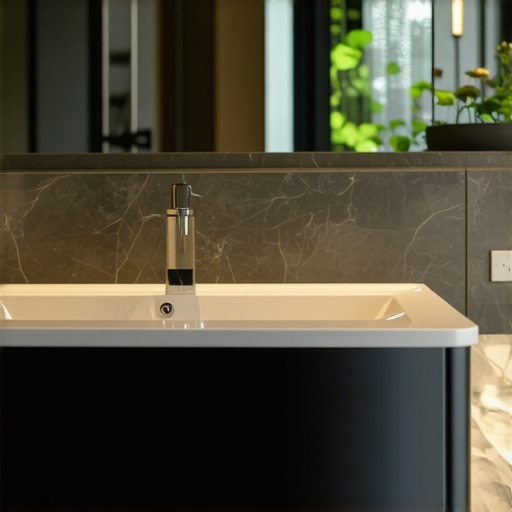
Incorporate an illustrative image here depicting nano-coated, moisture-responsive baseboards with embedded sensors, emphasizing their advanced material composition and integration within a modern bathroom.
Strategic Installation Practices for Enduring Waterproof Performance
Optimal installation entails meticulous preparation, including substrate assessment and the use of multi-layered waterproof membranes beneath the baseboard profiles. Professionals emphasize precision in sealing joints and penetrations with high-quality, flexible sealants that accommodate substrate movement. Employing concealed fastening systems not only enhances aesthetic continuity but also minimizes moisture entry points. Regular inspection protocols, supported by moisture meters and infrared imaging, are invaluable for early detection of potential failures, allowing timely intervention that preserves the baseboard’s integrity. Advanced installers often utilize laser-guided tools to ensure alignment and adherence to optimal installation parameters, thereby extending service life.
What’s the Next Level in Waterproofing for Bathroom Perimeters?
Emerging innovations include the development of self-healing composites with integrated microcapsules that deploy hydrophobic agents upon moisture contact, enabling real-time repair. These materials are especially promising in complex architectural designs where traditional sealing methods may be insufficient. They symbolize a shift towards autonomous, adaptive environments capable of maintaining their waterproof functions without frequent human intervention. To explore opportunities in integrating these technologies, consulting with industry pioneers and material scientists is essential, ensuring bespoke solutions tailored to specific bathroom configurations and aesthetic preferences.
Expert Insights on Future-Proofing Bathroom Environments
Advocate for Integrating Smart Materials
Recent advancements emphasize the importance of adopting smart, moisture-responsive materials that adapt to environmental changes, significantly extending the lifespan of bathroom waterproofing elements.
Leverage Nanotechnology for Resilience
Embedding nanoparticles within baseboard composites creates a molecular barrier against water infiltration and mold growth, revolutionizing maintenance routines and durability standards.
Prioritize Continuous Monitoring Solutions
Incorporating embedded sensors enables real-time detection of moisture ingress, facilitating proactive maintenance and safeguarding structural integrity over time.
Design for Seamless Integration
Innovative profiles and concealed fastening systems not only enhance aesthetic appeal but also reduce moisture entry points, ensuring long-term performance in humid environments.
Think Sustainability from the Start
Choosing eco-friendly, long-lasting materials aligns with evolving industry standards and customer expectations for sustainable bathroom solutions.
Curated Resources for Expertise Expansion
- Journal of Materials Science and Engineering – Features pioneering research on nanomaterials and smart composites shaping the future of waterproofing.
- Smart Building Association Reports – Provides insights into sensor integration and IoT applications for bathroom environments.
- Architectural Digest’s Design Innovations – Showcases cutting-edge bathroom designs emphasizing resilience and aesthetic cohesion.
- Industry Whitepapers on Sustainability – Offer guidelines on selecting environmentally responsible materials with longevity benefits.
- Technical Guides from Material Suppliers – Deliver practical tips on implementing nanocoatings and moisture-responsive components effectively.
\n
The Path Forward for Waterproof Baseboards
The evolution of waterproof baseboard technology underscores a move toward intelligent materials and integrated systems that prioritize durability, aesthetic harmony, and environmental responsibility. Professionals and homeowners alike must embrace these innovations, combining expert knowledge with cutting-edge resources to craft bathrooms that stand resilient amidst the challenges of high humidity and water exposure. For those looking to deepen their understanding or contribute to this field, exploring showers that wow modern designs in 2025 can inspire innovative thinking and design excellence. Stakeholders are encouraged to stay engaged, continually update their knowledge base, and adopt proactive strategies that future-proof bathroom environments, ensuring both beauty and performance endure well beyond 2026.